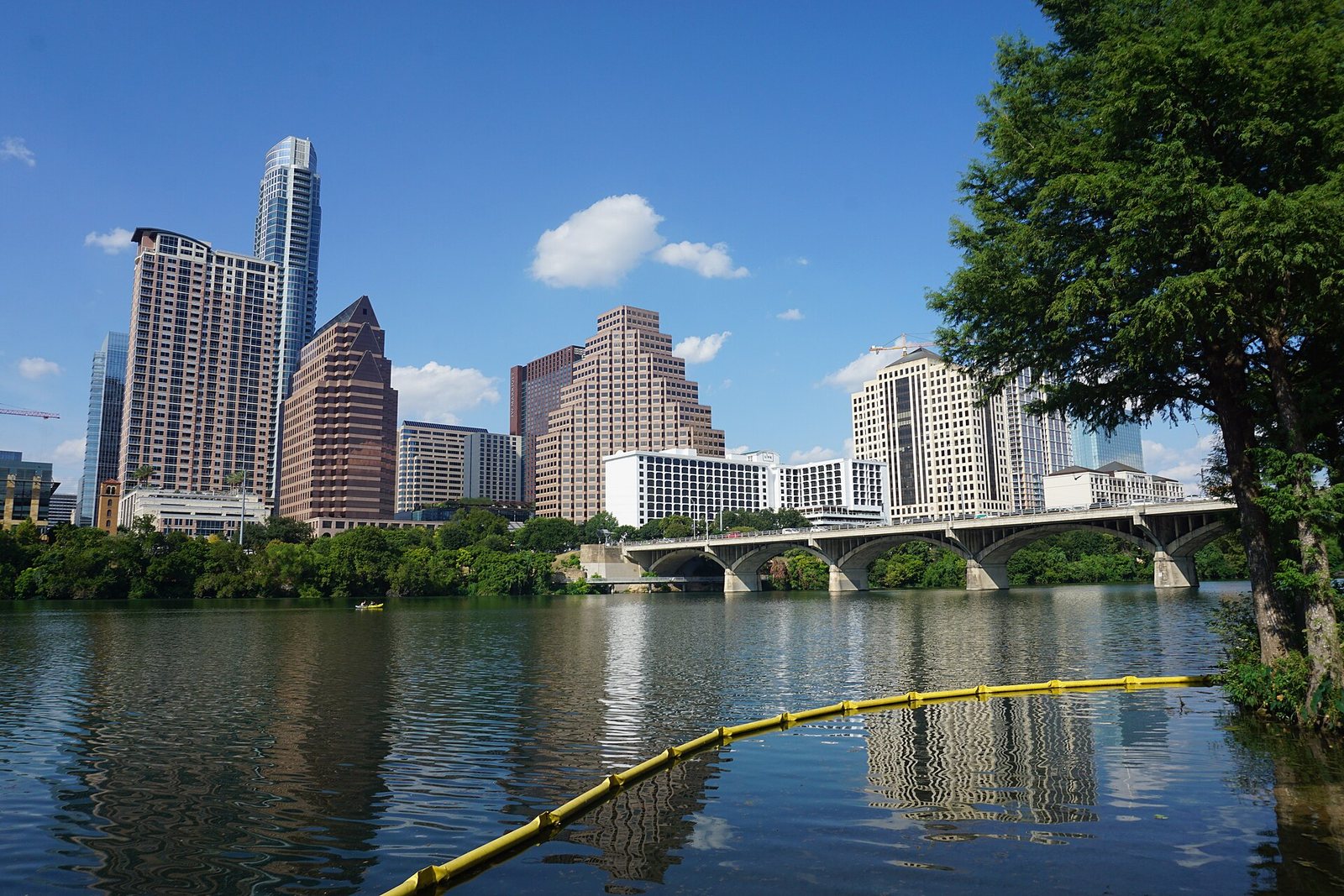
This pet friendly Austin travel guide starts with the short answer: Austin is one of the easier big Texas cities to visit with a dog, as long as you plan around heat, water and a short list of famous places that don’t allow pets. The City maps more than a dozen off-leash areas, patios are part of daily life, and two downtown hotels post dog policies with no weight limit. What catches visitors out is everything the postcards leave off: July pavement, toxic algae in a few coves, a bus system that doesn’t carry pets, and a famous swimming hole that won’t even let your dog wait in the car.
It’s written for travelers bringing a dog, though most of it applies to a cat in a carrier too. The one caveat that matters: pet policies and fees change with little notice, so treat the hotel details as a shortlist and confirm them when you book. Everything here was checked September 26, 2026 against official sources, from the City’s parks and animal services pages to CapMetro, Texas Parks and Wildlife, Travis County and the hotels’ own websites.
What’s closed or different right now?
Fall is the best season to bring a dog to Austin, but October and November 2026 come with a few specific catches.
- Zilker’s Great Lawn is closed through October 18, 2026. The 46-acre lawn, one of the City’s largest off-leash areas, has been closed since September 21 for the ACL Music Festival build and teardown. Barton Springs Pool, the Butler Trail, the Barton Creek Greenbelt and the Zilker playscape stay open, but the Stratford lot is closed until the same date.
- Lake Austin is being drawn down from October 12 to November 30, 2026. The City and the Lower Colorado River Authority are lowering the lake between Mansfield Dam and Tom Miller Dam, so the shoreline at Emma Long Metropolitan Park will sit lower and muddier than usual. Red Bud Isle, just below Tom Miller Dam on Lady Bird Lake, isn’t part of the drawdown.
- Toxic algae is still on the City’s watch list. The latest City status, dated June 2, 2026, reported thick mats of possibly toxic algae at Red Bud Isle and at Walsh Boat Landing on Lake Austin. Austin has attributed six dog deaths to algae toxins since 2019, so check the City’s algae page before any swim.
- Butler Trail detours near I-35. TxDOT’s I-35 rebuild has put the north-shore trail near Rainey Street on detours. The City expected the permanent route back around September or October 2026, with intermittent detours again from November 2026 through January 2027.
- A statewide screwworm alert. Texas Parks and Wildlife posted a New World screwworm alert on June 13, 2026 and asks visitors to check their pets often. The larvae infest open wounds, so look your dog over after brushy hikes.
- Big-event weekends. ACL Fest runs October 2 to 4 and 9 to 11, and the Formula 1 United States Grand Prix is October 23 to 25, 2026. If a hotel limits its pet rooms, those go first on weekends like these.
Austin with a pet at a glance
The costs here are what a pet adds to a trip, not the trip itself.
| What you’re planning | What it adds | Time needed | Best time | Book or check ahead? |
|---|---|---|---|---|
| A hotel that takes dogs | $0 at The LINE; about $100 to $150 at several others | n/a | Book early for big-event weekends | Yes: weight caps run from 25 pounds to none |
| Off-leash play | Free; Zilker parking is $3 an hour on weekends and holidays from spring break to Labor Day | 30 to 90 minutes | Before 9 a.m. or after sunset from May to September | Check the Great Lawn closure and the City’s algae page |
| A trail walk | Free on City trails | 1 to 3 hours | Early morning in summer; any time October to April | Check Butler Trail detours and creek levels |
| A patio meal or a beer | No pet charge | 1 to 2 hours | Evenings in summer, lunch the rest of the year | Ask: each business decides |
| A creek or lake swim | Free | An hour or two | Mornings, when water is flowing and clear | Always: algae status, water levels, closures |
| A state park day trip | $6 to $8 per adult for entry | Half a day to a full day | October to April | Yes: reserve day passes with Texas Parks and Wildlife |
When is the best time to bring a dog to Austin?
Late October through April. At Camp Mabry, the official weather station 3.4 miles northwest of the Capitol, normal highs reach 90°F by May 26 and don’t drop back below it until September 23. July’s normal high is 96.6°F and August’s is 97.8°F. The city averages 28.8 days a year at 100°F or hotter, about 13 of them in August, and the record is 112°F, reached in 2000 and again in 2011. At 2 p.m. in August, a dark parking lot is no place for paw pads.
Summer trips with a dog work on a different clock: out at dawn, inside by 10 a.m., out again after sunset. Fall is the sweet spot once ACL wraps up. Winter is mild, with the occasional hard freeze. Spring is green and pleasant, though March brings SXSW crowds, and Zilker’s weekend parking fees start on the first Saturday of spring break.
Verdict: Pick late October, November, March or April if you can. If summer is the only option, choose a hotel a short walk from shade and grass, and build each day around early mornings and late evenings.
Where can dogs run off-leash in Austin?
Only in designated areas. “Austin City Code requires dogs to be on a leash in public areas, unless designated otherwise by City Code,” as the Parks and Recreation Department puts it, and that covers greenbelts, the Butler Trail and every park that isn’t on the off-leash map. The good news is that the map is long: the City’s February 2026 version shows more than a dozen areas, from a three-acre lawn across the lake from downtown to wooded parkland of nearly 200 acres.
The rules are the same everywhere:
- Leash your dog on the way to and from the off-leash area.
- Keep your dog within sight and sound control at all times.
- No dogs in heat.
- Remove an aggressive dog immediately, which means carrying a leash even inside the off-leash zone.
- Rabies vaccinations are required for all dogs under state law, so bring your dog’s certificate.
- Pick up after your dog and put the bag in a trash can.
The City’s dog guide adds two sensible suggestions: bring water and a bowl, and leave the retractable leash at home.
| Off-leash area | Size | Address | Why go | Watch for |
|---|---|---|---|---|
| Auditorium Shores | 3 acres | 1100 W. Riverside Dr. | The quick run closest to downtown and South Congress | Weekend sunset crowds |
| Red Bud Isle | 13 acres | 3401 Red Bud Trl. | A wooded island loop with lake access | Algae advisories |
| Great Lawn, Zilker Park | 46 acres | 2100 Barton Springs Rd. | Room to sprint flat out | Closed through Oct. 18, 2026 for ACL |
| Barking Springs, Zilker Park | 1 acre | 2105 Andrew Zilker Rd. | Wading in Barton Creek below the pool | Water depends on rain |
| Riverside Shores | 2 acres | 1016 Edgecliff Terrace | A lakeside stop east of South Congress | I-35 construction nearby |
| Shoal Creek Greenbelt | 31 acres | 2610 Shoal Creek Blvd. | A long, shady creekside ramble | Flooding after storms |
| West Austin Neighborhood Park | Under 1 acre | 1317 W. 10th St. | A small neighborhood spot near Clarksville | Limited space |
| Walnut Creek Metro Park | 185 acres | 12138 N. Lamar Blvd. | Long woods walks in North Austin | Mountain bikes |
| Emma Long Metro Park | 193 acres | 1711 City Park Rd. | Turkey Creek Trail, a designated off-leash hike | Park entry rules; Lake Austin drawdown |
Auditorium Shores
Three acres at 1100 W. Riverside Drive, on the south shore of Lady Bird Lake and facing downtown across the water. It’s the nearest off-leash grass for most downtown and South Congress hotels, and it’s flat and open, which is exactly what you want at 7 a.m. before a day of sightseeing. Expect company around sunset on weekends. The Butler Trail runs right past, so you can pair a leashed lake walk with twenty minutes of fetch and still be back for breakfast.
Red Bud Isle
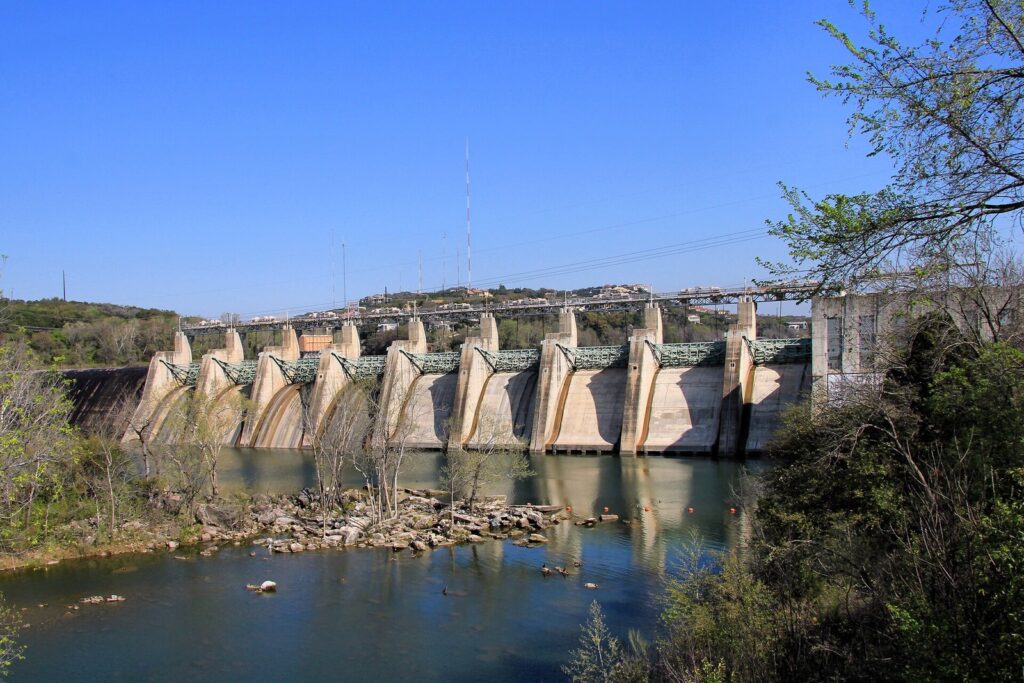
Thirteen acres at 3401 Red Bud Trail, where the Colorado River leaves Tom Miller Dam and becomes Lady Bird Lake. It’s a small wooded island with a loop trail and plenty of shoreline, which is why dogs head straight for the water. It’s also one of the two spots named in the City’s latest algae status, dated June 2, 2026, which reported thick mats of possibly toxic algae there. The City’s advice is blunt: don’t let dogs drink natural water, keep them away from algae, rinse their fur with clean water after contact, and don’t let them lick their fur before you rinse.
Treat Red Bud Isle as a walk first and a swim only when the algae page gives you no reason to worry. Carry a jug of tap water for rinsing, and if your dog drools, stumbles, vomits or struggles to breathe after a swim, go straight to an emergency vet. Algae toxins can act fast.
Zilker Park: the Great Lawn and Barking Springs
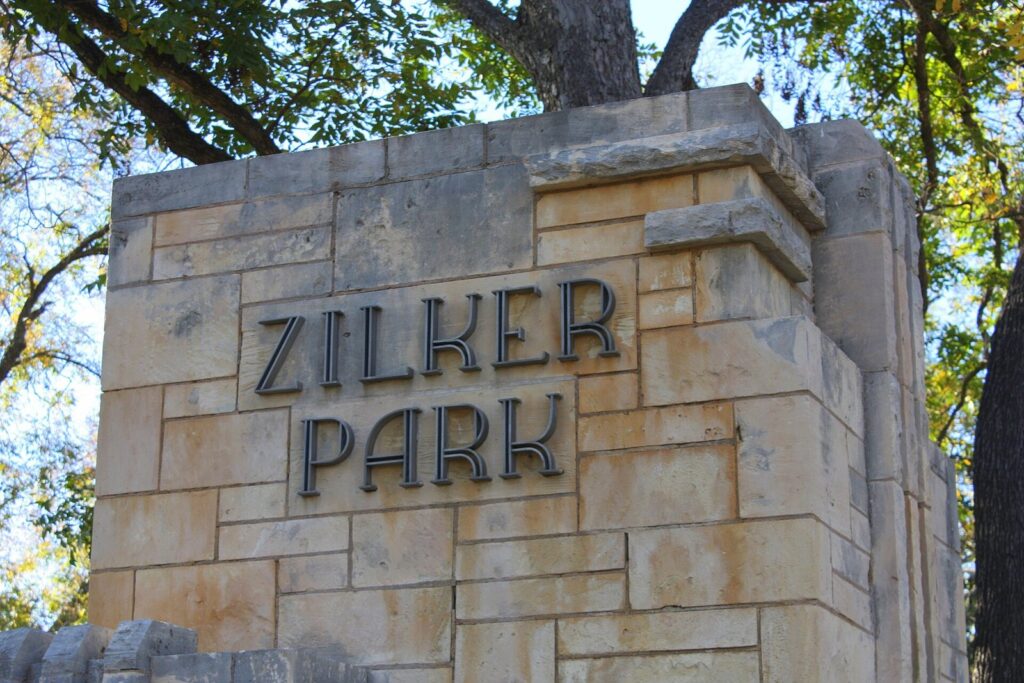
Zilker has two separate off-leash areas. The Great Lawn, 46 acres at 2100 Barton Springs Road, is the big open field in the middle of the park, and on a normal day it’s the best place in the city for a dog that needs to run flat out. ACL Fest closes it every fall, and in 2026 it’s closed through October 18.
Barking Springs, one acre at 2105 Andrew Zilker Road, is a stretch of Barton Creek just downstream of Barton Springs Pool, where dogs wade and paddle when the creek is running. The pool itself doesn’t allow pets, so this is your dog’s version. Zilker is open 5 a.m. to 10 p.m., and from the first Saturday of spring break through Labor Day, parking costs $3 an hour on weekends and holidays.
Shoal Creek Greenbelt
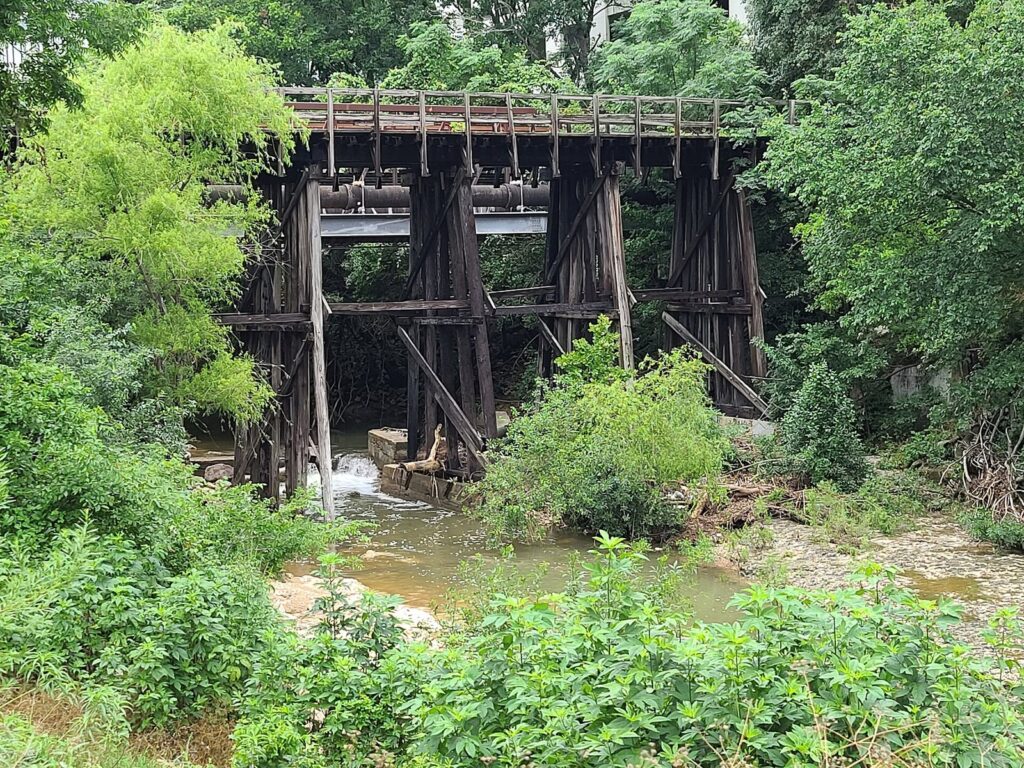
Thirty-one acres at 2610 Shoal Creek Boulevard, along the creek that runs through central Austin west of the UT campus. The off-leash area is long and narrow rather than a single lawn, which suits dogs that like to trot and sniff more than sprint. The full Shoal Creek Greenbelt Trail and Sidewalk runs 6.82 miles by the City’s count, so you can keep going on-leash well past it. Like every creek in town, Shoal Creek rises fast in a storm; if it’s pouring, pick another day.
Walnut Creek Metropolitan Park
At 185 acres, 12138 N. Lamar Boulevard, this is the big North Austin option and the natural pick if you’re staying near The Domain. The City lists the main trail at 5.32 miles, plus a 10-mile intermediate trail, both shared with mountain bikers, so call your dog in when you hear tires on gravel. The tree cover matters from May onward.
Emma Long Metropolitan Park and Turkey Creek Trail
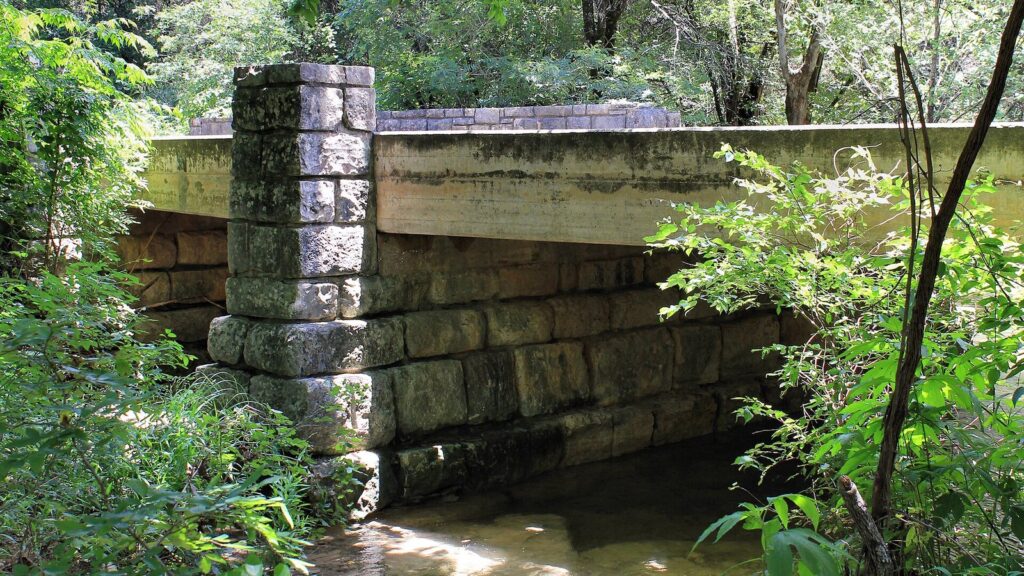
Emma Long covers 193 acres at 1711 City Park Road on Lake Austin, about a 30-minute drive from downtown. The draw is Turkey Creek Trail, a 1.92-mile trail the City designates for hiking with off-leash dogs, and the closest thing Austin has to a proper off-leash hike: it follows the creek through the woods instead of circling a lawn. Check the City’s Emma Long page for entry and parking rules before you drive out.
The rest of the map
Two smaller central spots round out the list: Riverside Shores, two acres at 1016 Edgecliff Terrace near I-35 on the south shore (older City guides call it the Norwood tract), and West Austin Neighborhood Park, under an acre at 1317 W. 10th Street near Clarksville. Staying south or east? The map also shows Onion Creek Greenbelt (107 acres), Mary Moore Searight Metropolitan Park (39 acres) and Davis-White Northeast Neighborhood Park (58 acres), plus small bark parks whose status the printed map doesn’t make clear, so check the City’s interactive map before you drive to one.
Verdict: Downtown or South Congress, use Auditorium Shores for daily runs and save Red Bud Isle for a morning when the algae report is clean. In North Austin, go to Walnut Creek. For a hike rather than a lawn, Turkey Creek Trail is worth the drive.
Where aren’t dogs allowed in Austin?
A handful of the city’s best-known sights are off-limits to pets, and it’s worth knowing which before you build a day around them. Service animals are allowed at all of these.
| Place | The rule | What to do instead |
|---|---|---|
| Barton Springs Pool | No pets, on the same list as glass, coolers and alcohol | Barking Springs, just downstream |
| Hamilton Pool Preserve (Travis County) | No pets, not even left in a vehicle | Go on a day the dog stays with a sitter |
| Texas State Capitol | No pets; ADA service animals only | See it from the Congress Avenue sidewalks |
| Lady Bird Johnson Wildflower Center | Service dogs only | A leashed walk on a City greenbelt |
| Mayfield Park and Nature Preserve | No dogs and no emotional support animals; ADA service animals only | Red Bud Isle, a few minutes’ drive away |
| UMLAUF Sculpture Garden and Museum | No dogs except service animals | Zilker’s trails next door |
| CapMetro buses and trains | No pets, emotional support animals or comfort animals | Rideshare or your own car |
| Enchanted Rock State Natural Area | Pets only in day-use picnic areas, campgrounds and on the Loop Trail | Hike the Loop Trail with the dog; save the summit for another trip |
| McKinney Falls State Park | No pets in the water at the Upper and Lower Falls | Leashed walks on the park’s trails |
One distinction matters. Under the Americans with Disabilities Act, a service animal is a dog trained to do specific work or tasks for a person with a disability. An emotional support animal isn’t, however much it helps its owner, so a “service animals only” place can turn it away; Mayfield Park and CapMetro say so explicitly. Hotels generally treat emotional support animals as pets, fees and all, though Archer Hotel Austin’s posted policy names emotional support dogs alongside pet dogs.
Which Austin hotels allow dogs?
Plenty do, but “pet-friendly” covers everything from “any dog, no fee” to “one dog under 25 pounds, $100.” These are the policies posted on the hotels’ own websites in September 2026. It’s a shortlist, not a directory, and policies change, so confirm yours when you book.
| Hotel | Where | Posted pet policy (Sept. 2026) | Best fit |
|---|---|---|---|
| The LINE Austin | Downtown | All pets stay free; no pet fees and no weight limits | Big dogs, or more than one |
| Hotel Van Zandt | Downtown, by Rainey Street | Dogs of any weight, height or breed; $100 pet fee, 10% of it donated to the Austin Animal Center; two dogs per room at most | Big dogs near the Butler Trail |
| Four Seasons Hotel Austin | Downtown, facing Lady Bird Lake | Pets up to 60 pounds | Mid-size dogs and a lakeside lawn |
| The Driskill | Sixth and Brazos, downtown | One dog up to 50 pounds, or two dogs up to 75 pounds combined | Small to mid-size dogs and a historic stay |
| Archer Hotel Austin | The Domain, North Austin | One pet dog or emotional support dog up to 50 pounds per room, on request; $150 nonrefundable cleaning deposit per stay | Shopping trips, close to Walnut Creek |
| Fairmont Austin | Downtown | Pets up to 25 pounds; $100 one-time fee | Small dogs |
| Austin Motel | South Congress | Well-behaved dogs for a small fee; a dog bed, bowl and treats supplied | A walkable, retro base on South Congress |
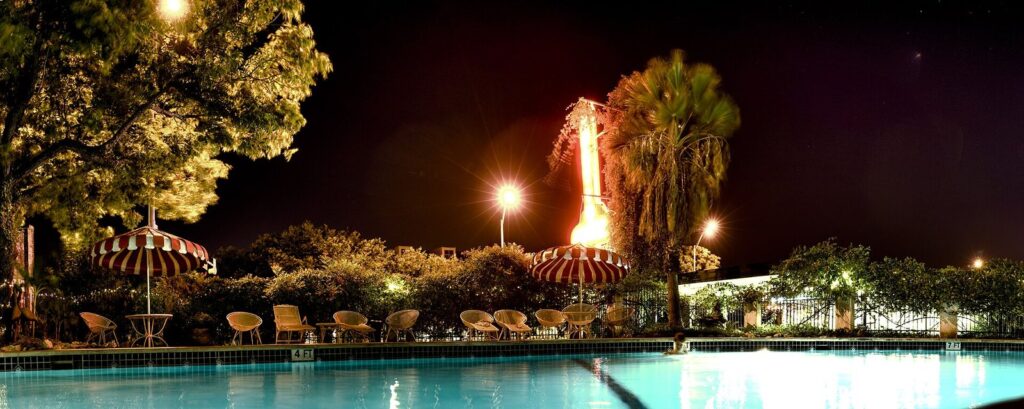
The differences come down to weight, headcount and cleaning, so read past the headline and ask:
- Per dog or combined? The Driskill’s rule is one dog up to 50 pounds, or two up to 75 pounds between them.
- Per stay or per night, and refundable? Archer’s $150 is a nonrefundable deposit per stay; Fairmont’s $100 is a one-time fee.
- Can the dog stay alone in the room? Many hotels ask for a crate or a phone number when you step out. Ask before you plan a dinner without the dog.
- Service animals are different. Under the ADA, hotels can’t charge a pet fee for a service animal, though they can bill for damage.
Where should you stay with a dog?
Location matters more than amenities. With a dog, the best base is a short walk from the Butler Trail or a shady park, not a rooftop pool: downtown’s lakefront hotels and the Rainey Street area put you on the trail, while South Congress and Zilker put you near Auditorium Shores, Barking Springs and the Greenbelt. Our guide to where to stay in Austin has the full breakdown, and the Austin neighborhoods guide covers what each area is like on foot. A vacation rental with a fenced yard can beat any hotel with a big dog; check the pet rules, and check whether the street has sidewalks, because plenty of Austin neighborhoods don’t.
Verdict: For a dog over 60 pounds, The LINE (no fee, no weight limit) and Hotel Van Zandt (no size limit, $100 fee) are the easy downtown picks. Under 25 pounds, every hotel here works.
Can you bring a dog to Austin restaurants, bars and breweries?
Outside, often. Inside, almost never. Health rules keep pets out of indoor dining rooms, with service animals the exception, so Austin’s dog life happens on patios, in beer gardens and around food truck lots. Whether a patio takes dogs is each business’s call. Many say so on their website or with a sign by the door; if you can’t tell, ask before you sit down.
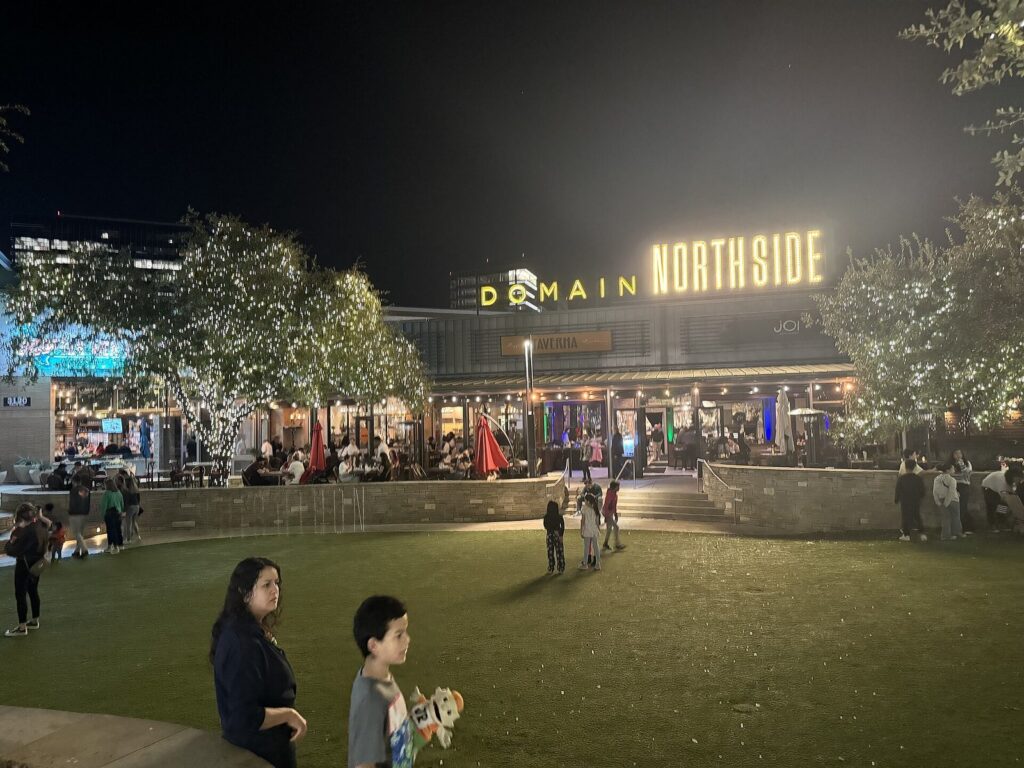
Austin makes this easy. Visit Austin counts more than 50 breweries in the city, the taproom with a big yard is a common format, and Visit Austin describes Austin Beerworks’ weekend taproom, with its food trucks and live music, as welcoming both pets and kids. Porch-front coffee shops, taco trailers with picnic tables and neighborhood bars with backyards fill in the rest. Our best restaurants in Austin guide covers the food, and the Austin nightlife guide covers the bars and beer gardens.
A few habits keep patio time easy:
- Check the ground. Concrete and artificial turf both bake. If you’d regret standing on it barefoot, so will your dog.
- Bring a bowl and a mat. Many places put out water; don’t count on it.
- Short leash, no furniture. It’s the rule at most dog-friendly spots, and it keeps them dog-friendly.
- Go early or late in summer. A shaded patio with misters at 7 p.m. is pleasant. At 3 p.m. in August, it isn’t.
Which Austin trails are best with a dog?
Most City trails allow leashed dogs, and a few have off-leash sections. The big three for visitors are the Butler Trail around Lady Bird Lake, the Barton Creek Greenbelt and Shoal Creek. For the full range of hikes, paddling and parks, see our guide to outdoor activities in Austin.
| Trail | Length | Dog rule | Best for |
|---|---|---|---|
| Ann and Roy Butler Hike-and-Bike Trail | About 10 miles around Lady Bird Lake | Leash required | Flat miles and skyline views straight from downtown hotels |
| Barton Creek Greenbelt | 7.5-mile main trail; more than 12 miles in all | Leash of 6 feet or shorter | Limestone, shade and creek swims after rain |
| Shoal Creek Greenbelt Trail and Sidewalk | 6.82 miles | Leash, except in the 31-acre off-leash area | Low-key central walks |
| Walnut Creek Metro Park trails | 5.32 miles, plus a 10-mile intermediate trail | Large off-leash area; trails shared with bikes | Long woods walks in North Austin |
| Turkey Creek Trail, Emma Long Metro Park | 1.92 miles | Designated off-leash | A short off-leash hike along a creek |
| Mount Bonnell (Covert Park) | Stone stairs to the top | Leash required | The classic Lake Austin view, early in the day |
The Butler Trail with a dog
The 10-mile loop is Austin’s front porch, and on a weekend morning it can feel like one. Keep your dog on a short leash and to the right, because runners, strollers, cyclists and paddlers heading for the rental docks all share it. The boardwalk on the south shore, which closed a 1.3-mile gap in the trail in 2014 and is open 5 a.m. to midnight, is the most exposed stretch, with little shade at midday. You don’t have to do the whole loop: walk one shore between two bridges and cross back, and you have a two- or three-mile walk that ends near a patio.
The Barton Creek Greenbelt with a dog
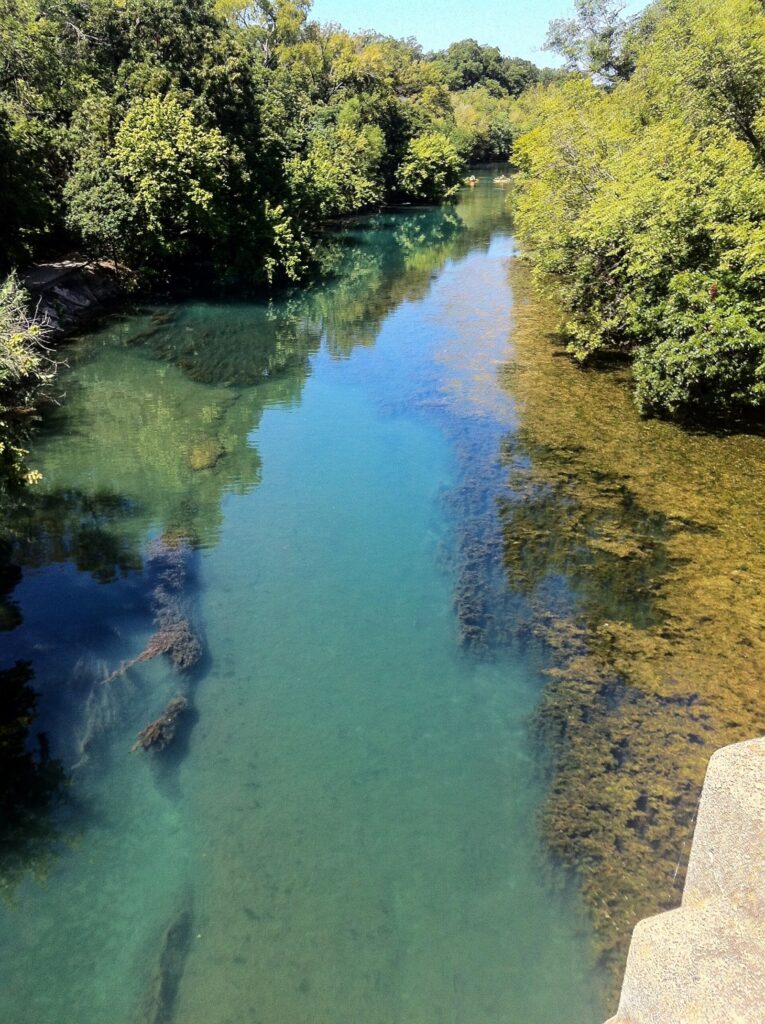
The Greenbelt is where Austin dogs go to get muddy. Its 7.5-mile main trail follows Barton Creek west from Zilker through limestone canyon and cedar woods, and after a wet spell there are swimming holes along the way; in a dry spell, the creek is a bed of hot rocks. The City doesn’t monitor water levels and points visitors to USGS and LCRA gauges, and it warns that levels can change quickly and without warning.
Leashes must be 6 feet or shorter. Lighting is minimal, facilities close at 10 p.m., and trash cans sit only at the trailheads, so carry the waste bag out. The easiest starts are the Zilker trailhead (2212 William Barton Drive, with a parking lot), Spyglass (1601 Spyglass Drive, street parking and a composting restroom) and the 360 Trailhead (3753 S. Capital of Texas Highway, a free lot and composting restrooms). Camp Craft Road’s paid street parking leads to the Hill of Life, a steep, rocky climb best skipped with a dog in summer.
Verdict: For a first morning, walk the Butler Trail from your hotel. For a proper outing, drive to Spyglass or the 360 Trailhead early, after checking the creek.
How do you keep a dog safe in Austin’s heat?
Heat is what every Austin dog day should be planned around, and it builds faster than visitors expect. The City’s off-leash safety sheet tells owners to bring water and a bowl (creeks may be dry, and lake water can carry algae toxins) and to watch for signs of heat exhaustion. In practice:
- Walk early and late. From late May to late September, finish the long walk before 9 a.m. and save the next one for after sunset.
- Test the pavement. The usual rule of thumb: if you can’t hold the back of your hand on the asphalt for seven seconds, it’s too hot for paws. Stick to grass, dirt and shade.
- Know the signs. Heavy panting that won’t settle, thick drool, weakness, stumbling, vomiting or very red gums mean shade or air conditioning, cool (not ice-cold) water on the coat and a call to a vet.
- Flat-faced breeds need extra care. The City’s dog guide notes that some breeds are especially vulnerable to heat, and bulldogs and pugs overheat faster than most.
- Never leave a dog in a parked car, not for five minutes, not with the windows cracked. Hamilton Pool Preserve bans pets outright, even ones left in a vehicle.
Two more local hazards. Austin’s bats live under the Congress Avenue Bridge from spring into fall, and a bat on the ground is usually sick or hurt, so keep your dog well away; if a pet may have been bitten, the Austin Bat Refuge says to call animal control through 311. And with the screwworm alert in force, check for cuts after every hike. Save the address and number of a 24-hour emergency animal hospital near your lodging on day one, because 11 p.m. with a sick dog is the wrong time to start searching.
Is it safe for dogs to swim in Austin’s lakes and creeks?
Sometimes. Visitors mix up Austin’s three lakes, and the rules and risks differ:
- Lady Bird Lake is the downtown lake, between Tom Miller Dam and Longhorn Dam. City Code bans people from swimming in it; dogs wade in at off-leash areas like Red Bud Isle, where the City reported algae mats in June.
- Lake Austin sits above Tom Miller Dam and is being drawn down from October 12 to November 30, 2026. Emma Long is on its shore, and Walsh Boat Landing was the other spot in the June algae report.
- Lake Travis is the big reservoir farther northwest, with Travis County parks along its shore. The County warns that zebra mussels have been found along the shoreline of its lake parks, and the shells are sharp, so watch your dog’s paws.
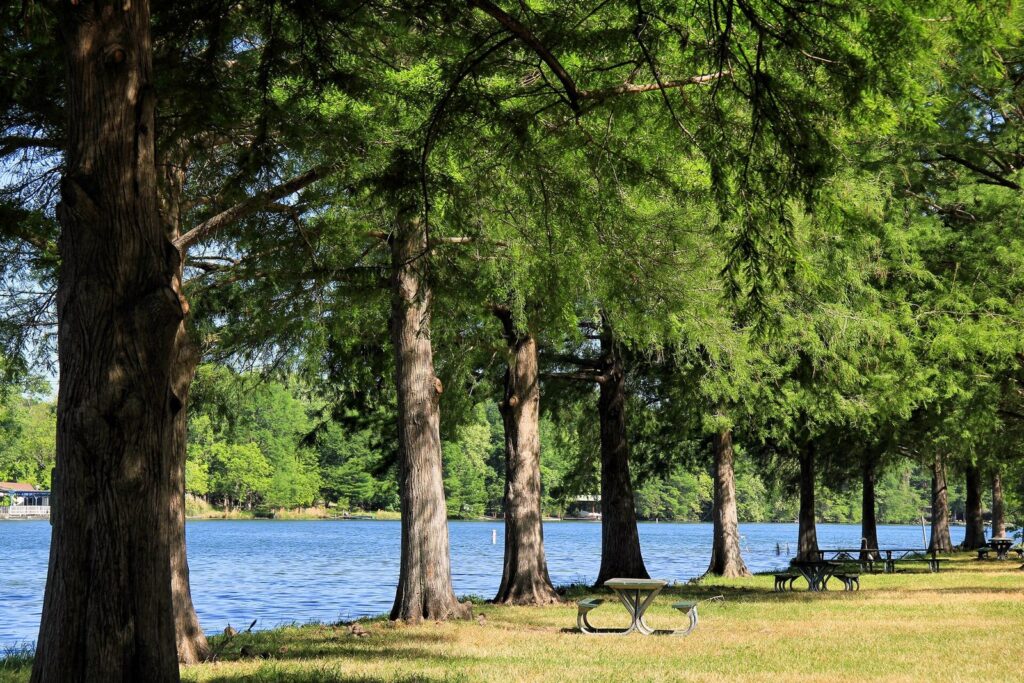
Creeks rise fast after storms and shrink to puddles in a dry spell. The City’s algae advice applies to natural water generally: stay out when it’s warm, stagnant or scummy, and for three days after rain. McKinney Falls State Park bars pets from the water at its Upper and Lower Falls. For a people-first rundown of where to swim, see our Austin swimming holes and lakes guide.
Verdict: A dog swim in Austin is a when-conditions-allow treat, not a daily plan. Clear, flowing creek water on a cool morning is the best bet; warm, still water in late summer is the one to skip.
How do you get around Austin with a pet?
Plan on a car. CapMetro’s code of conduct is stricter than some travel sites suggest: pets, emotional support animals and comfort animals aren’t allowed on its buses and trains. Service animals ride under the handler’s full control, under the seat or on the handler’s lap if small, and never in a cart or stroller or on a seat.
That leaves rideshare or a car. Some rideshare apps offer a pet-friendly ride type; if yours doesn’t, message the driver right after booking and bring a towel or seat cover. Drivers must accept service animals. With a rental, expect a cleaning charge for heavy shedding, and remember the car turns into an oven the minute you switch it off.
Flying? Your airline, not Austin-Bergstrom International Airport, sets carrier sizes, fees and seasonal temperature limits for pets, so check its rules early. The airport tells domestic travelers to arrive at least 2.5 hours before departure, and with a pet to check in, that’s not the day to cut it close. Our Austin travel guide covers the rest of arriving and getting around.
What are the best dog-friendly day trips from Austin?
Texas state parks welcome leashed dogs on most trails, but each park draws its own lines, and the most famous swimming hole near Austin bans them outright. Day passes sell out at the popular parks, so reserve with Texas Parks and Wildlife before you drive.
| Destination | Drive from downtown | Dog rules | Entry |
|---|---|---|---|
| McKinney Falls State Park | 13 miles from the Capitol, about 25 minutes | Leashed dogs on trails; no pets in the water at the Upper and Lower Falls | $6 for 13 and over; reserve day passes |
| Pedernales Falls State Park | About 30 miles west, roughly an hour | Leashed dogs, 6-foot leash maximum | $6 for 13 and over; the park often reaches capacity |
| Enchanted Rock State Natural Area | About two hours | Pets only in day-use picnic areas, campgrounds and on the Loop Trail, on a 6-foot leash | $8 for adults; reserve, especially September to May |
| Hamilton Pool Preserve | About an hour | No pets, not even in the car | Leave the dog at the hotel for this one |
With a dog, Enchanted Rock is a Loop Trail day rather than a summit day, since the Summit Trail isn’t among the places pets can go. McKinney Falls is the easy half-day, close enough to go at opening and be back before the heat. Pedernales suits a longer walk but fills on weekends, so book the pass first. For more trip ideas, with or without a dog, see our Austin vacation ideas.
What does a good dog day in Austin look like?
Here’s how the pieces fit on a warm day, staying downtown or on South Congress. Our Austin itineraries cover the people-only parts.
- 7 a.m.: a leashed Butler Trail loop, then twenty minutes off-leash at Auditorium Shores.
- 8:30 a.m.: breakfast tacos on a shaded patio that takes dogs.
- 10 a.m. to 5 p.m.: the dog naps in the air conditioning, crated if the hotel requires it, while you see the Capitol, a museum or Barton Springs Pool, places your dog couldn’t go anyway.
- 6:30 p.m.: Barking Springs or Red Bud Isle if the water is flowing and the algae page is clear; otherwise a Greenbelt walk from Spyglass.
- 8 p.m.: dinner or a beer on a dog-friendly patio or brewery yard.
From October to April, flip it: longer midday walks, patio lunches and one day for a state park.
What should you do if your pet gets lost or hurt?
- Before you go: microchip your pet with your cell number on file, put your number and hotel on the tag, and take a current photo.
- If your pet goes missing: use the City’s Pet Resource Center lost-and-found guide and call 311 for animal services. The Austin Animal Center, the City shelter, is at 7201 Levander Loop in East Austin.
- Bites and bats: call 311 for animal control if a pet may have been bitten, then call a vet.
Pet-Friendly Austin FAQ
Is Austin a dog-friendly city?
Yes, with conditions. The City maps more than a dozen off-leash areas, most trails allow leashed dogs, and many patios and brewery yards welcome them. The limits are heat from late May to late September, algae advisories on some waterways, a leash law everywhere else, and a few major sights, including Barton Springs Pool and the Capitol, that allow service animals only.
Can my dog swim at Barton Springs?
Not in Barton Springs Pool, which bans pets along with glass, coolers and alcohol. Dogs swim at Barking Springs instead, a one-acre off-leash area on Barton Creek just downstream of the pool, at 2105 Andrew Zilker Road. Whether there’s water to swim in depends on recent rain, and the City’s algae advice applies there too.
Are dogs allowed on CapMetro buses and trains?
Only service animals. CapMetro’s code of conduct doesn’t allow pets, emotional support animals or comfort animals on its services. Service animals must stay under the handler’s control, ride under the seat or on the handler’s lap, and can’t board in a stroller or cart. With a pet dog, plan on a car or a pet-friendly rideshare.
What’s the best month to visit Austin with a dog?
November, with late October, March and April close behind. Normal highs at Camp Mabry sit at 90°F or above from May 26 to September 23, and August averages about 13 days at 100°F or hotter. By November the festival crowds have thinned, mornings are cool and a full day outdoors with a dog is comfortable again.
Is Lady Bird Lake safe for dogs?
It depends on the week. The City’s latest algae status, from June 2, 2026, reported thick mats of possibly toxic algae at Red Bud Isle, and six Austin dog deaths have been attributed to algae toxins since 2019. Keep dogs out of water that looks scummy, warm or stagnant and for three days after rain, and rinse them after any swim.
Related Austin Guides
- Where to Stay in Austin: neighborhoods and hotel styles, including the areas closest to the Butler Trail.
- Outdoor Activities in Austin: hikes, paddling and parks, with the seasonal caveats.
- Austin Swimming Holes and Lakes: which water is open and safe, for people as well as dogs.
- Austin Vacation Ideas: trip styles and day trips to build a visit around.
- Austin Neighborhoods: what each part of town is like on foot.
Sources and verification
Details in this guide were checked on September 26, 2026 against the operators and agencies listed below. The guide is compiled from them, not from other travel lists, and it doesn’t claim first-hand visits. Hotel pet policies come from each hotel’s own website.
- City of Austin Parks and Recreation: Dog parks and off-leash areas; Off-leash area map, February 2026; Trail directory; Barton Creek Greenbelt; Zilker Metropolitan Park; Barton Springs Pool; Butler Trail and Boardwalk; Emma Long Metropolitan Park; Mayfield Park; Facility closures and detours
- City of Austin Animal Services: Austin Guide to Dogs and Cats; Off-Leash Dog Park Safety
- City of Austin Watershed Protection: Algae in Austin’s waterways
- CapMetro: Code of conduct
- NOAA and the National Weather Service: 1991-2020 monthly normals, Austin Camp Mabry; NWS Austin/San Antonio climate normals
- Texas Parks and Wildlife: McKinney Falls State Park; Pedernales Falls State Park; Enchanted Rock State Natural Area; Screwworm alert
- Travis County Parks: Hamilton Pool Preserve; Mansfield Dam Park (zebra mussel notice)
- Other attractions: Texas State Capitol accessibility; UMLAUF Sculpture Garden and Museum; Lady Bird Johnson Wildflower Center; Austin Bat Refuge
- Hotels: The LINE Austin; Hotel Van Zandt; Four Seasons Hotel Austin; The Driskill; Archer Hotel Austin; Fairmont Austin; Austin Motel
- Travel and events: Austin-Bergstrom International Airport; ACL Music Festival; Formula 1 United States Grand Prix; Visit Austin: breweries
Photo credits
- Tom Miller Dam, Austin: photo by Larry D. Moore, Wikimedia Commons (CC BY 4.0)
- Zilker Park entrance sign: photo by Matthew Rutledge, Wikimedia Commons (CC BY 2.0)
- Timber trestle over Shoal Creek: photo by TerraFrost, Wikimedia Commons (CC BY-SA 4.0)
- Turkey Creek bridge, Emma Long Metropolitan Park: photo by Larry D. Moore, Wikimedia Commons (CC BY 4.0)
- Austin Motel pool at night: photo by Kyle Watson, Wikimedia Commons (CC BY-SA 2.0)
- Domain Northside at night: photo by Slamforeman, Wikimedia Commons (CC BY 4.0)
- Barton Creek: photo by jcutrer, Wikimedia Commons (CC BY-SA 4.0)
- Emma Long Metropolitan Park shoreline: photo by Larry D. Moore, Wikimedia Commons (CC BY 4.0)
- Lady Bird Lake and downtown Austin (featured image): photo by Michael Barera, Wikimedia Commons (CC BY-SA 4.0)