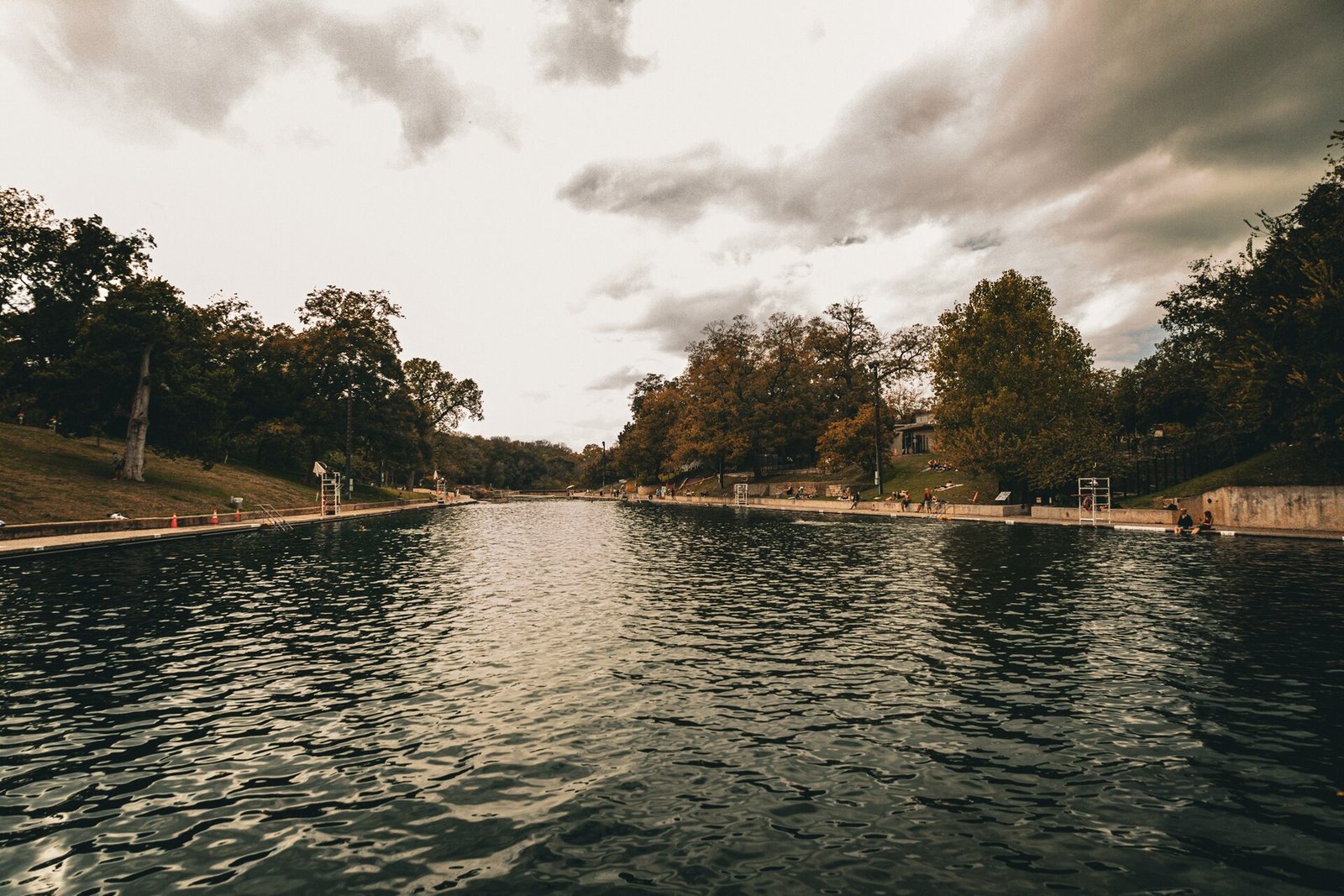
Austin swimming holes and lakes come in three kinds: spring-fed pools in the middle of the city, creeks and lake beaches on its edges, and Hill Country swims that need a car and often a reservation. Start with Barton Springs Pool, which holds around 68 to 70 degrees all year and costs a non-resident adult $9. Deep Eddy is the other classic pool. For wild water, the Barton Creek Greenbelt, McKinney Falls and Hamilton Pool deliver when conditions allow. One rule surprises every visitor: swimming in Lady Bird Lake, the lake downtown, is illegal. Paddle it instead.
This guide is for anyone planning a swim, a paddle, a boat day or a tubing trip from Austin. The caveat that matters: natural water here changes fast. Rain can close a creek or send a river over its banks, drought can drain a swimming hole, and algae or bacteria can shut a beach. Hours, fees, reservations and closures below were checked on September 23, 2026 against the City of Austin, Travis County, Texas Parks and Wildlife and the operators themselves. For how swimming fits with the rest of a visit, see our guide to things to do in Austin.
What’s closed or different right now?
- Lake Austin drawdown, October 12 to November 30, 2026. The City and LCRA are lowering Lake Austin between Mansfield Dam and Tom Miller Dam. The City’s Emma Long Metropolitan Park says swimming there is prohibited for the whole period.
- Barton Springs is open with work going on. A retaining-wall repair and tree removal along the pool’s eastern edge began September 8 and runs in phases into early 2027, with normal hours. On ACL’s second weekend, October 9-11, you can only enter from Azie Morton Road.
- Deep Eddy now closes on Tuesdays. The weekly closure for cleaning started April 21, 2026. Its posted season hours run through October 31, and winter hours weren’t posted when we checked.
- Hamilton Pool is only partly swimmable. Travis County allows water access from the beach, but only a very limited part of the pool because of falling rocks, and the trail behind the waterfall is closed. Reservations were open through November 2026.
- Jacob’s Well is still closed to swimming. Hays County suspended swimming at the Wimberley spring in June 2022 because of low groundwater, and Wimberley’s visitor bureau lists it as still closed in 2026.
- Algae warning for dog owners. The City’s latest update, dated June 2, 2026, reported thick mats of possibly toxic blue-green algae at Red Bud Isle on Lady Bird Lake and Walsh Boat Landing on Lake Austin.
Where to swim near Austin at a glance
Prices are for a non-resident adult. The “swimming now” column reflects what each operator posted on September 23, 2026.
| Place | Type | Cost | Book ahead? | Swimming now |
|---|---|---|---|---|
| Barton Springs Pool | Spring-fed pool, 68-70°F | $9 | No | Yes; Thursdays closed 9 a.m.-7 p.m. for cleaning |
| Deep Eddy Pool | Spring-fed pool | $9 | No | Yes; closed Tuesdays |
| Barton Creek Greenbelt | Creek swimming holes | Free | No | Only when the creek is running |
| McKinney Falls State Park | Creek and limestone falls | $6 (13 and up) | Day passes sell out on weekends | Allowed; check creek conditions |
| Emma Long Metropolitan Park | Lake Austin beach | Vehicle entry fee | Buy weekend passes online | Not from Oct. 12 to Nov. 30 |
| Hamilton Pool Preserve | Collapsed grotto and waterfall | $12 per vehicle, then $8 cash | Required | Limited area only |
| Lake Travis county parks | Lake coves | Per-person day fee, cash | No | At your own risk; no lifeguards |
| Pedernales Falls State Park | River | $6 (13 and up) | Recommended | Not in the falls area |
| Blue Hole, Wimberley | Creek swimming hole | Reservation | Required | Season ended; back in May |
Which swim fits your trip?
| If you… | Go to | Why |
|---|---|---|
| Have an hour to spare downtown | Barton Springs Pool | A short ride from downtown, open 5 a.m. to 10 p.m. most days |
| Want to swim laps | Deep Eddy Pool | Lap swimming from 8 a.m. to 8 p.m. (closed Tuesdays) |
| Have small children | Deep Eddy or a City splash pad | Calmer water and lifeguards; splash pads are free May through October |
| Don’t have a car | Barton Springs Pool | CapMetro Route 30 stops there, and the lake trail leads there from downtown |
| Want a wild swim | The Greenbelt after rain, or McKinney Falls | Limestone, trees and moving water, 15 to 30 minutes from downtown |
| Want the famous photo | Hamilton Pool Preserve | Reserve a slot; swimming is limited, the view isn’t |
| Want a lake beach | Emma Long or the Pace Bend coves | Sand at Emma Long (not October 12 to November 30); open water at Pace Bend |
| Are visiting in winter | Barton Springs Pool | 68 to 70 degrees all year |
The best places to swim in and around Austin
These are ranked for a visitor: reliability first, then how special the water is, then how far you have to drive.
1. Barton Springs Pool
If you swim once in Austin, swim here. Barton Springs is a spring-fed pool in Zilker Park with an average temperature of 68 to 70 degrees, which the City calls ideal for year-round swimming. It feels icy for the first minute in July and almost warm in January. It opens every day except Thursday from 5 a.m. to 10 p.m., with “swim at your own risk” hours from 5 to 8 a.m. and lifeguards from 8 a.m. On Thursdays it closes from 9 a.m. to 7 p.m. for cleaning.
Non-resident day admission is $9 for adults, $5 for juniors aged 12 to 17, $4 for children 1 to 11 and $5 for seniors; infants and honorably discharged veterans swim free. Buy online, in the ATXSwims app, at the card kiosks outside both entrances, or with cash at the window. Leave coolers, food, pets, glass, frisbees, portable speakers and alcohol behind: none are allowed. Inflatables are fine only where the water is 5 feet deep or less.
Parking is at the north lot (2201 William Barton Drive) and the south lot (1000 Azie Morton Road), free on weekdays and $3 an hour on weekends and holidays in the spring and summer season. CapMetro Route 30 stops at the pool. Floods close it without warning, as happened for a week in June 2026, so call 512-974-6300 or check the City’s closures page if it has rained hard.
Staying a while? Season passes cover every City pool, parking included, and run through October 31 of the season you buy them: $280 for a non-resident adult or $515 for a non-resident family of four, less for residents. The pool’s historic bathhouse partly reopened in October 2025 after renovation, with new restrooms and showers entered from the pool side; the City’s closures page, last updated in June, still listed the main rotunda entry as closed for construction.
Verdict: The one essential swim in Austin, and the best $9 in the city. Go on a weekday morning for elbow room.
2. Deep Eddy Pool
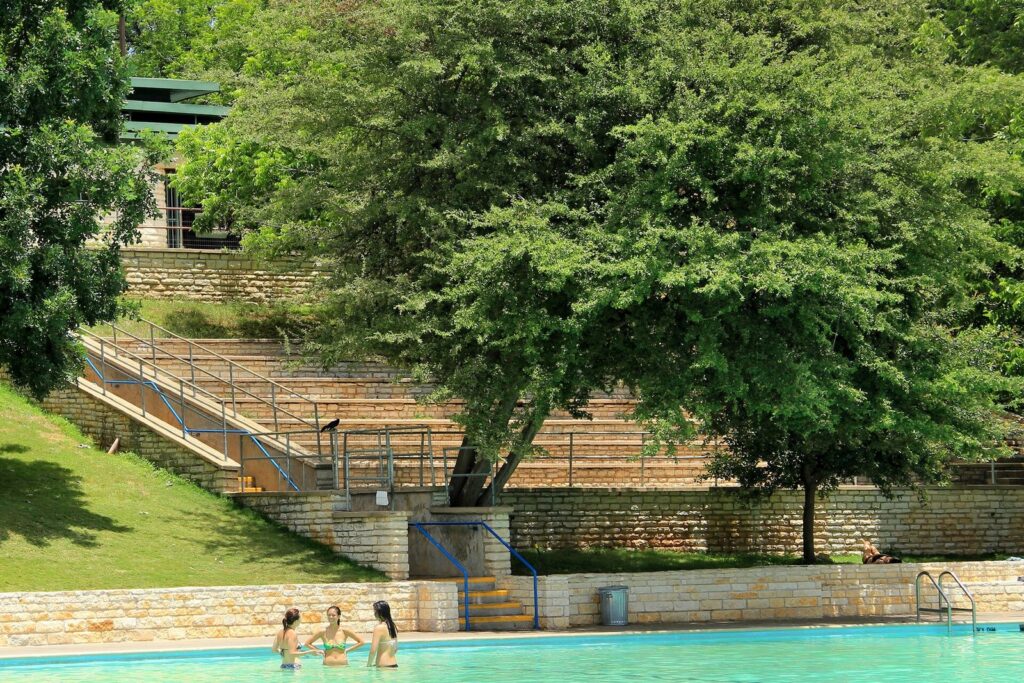
The City calls Deep Eddy, at 401 Deep Eddy Avenue near Lake Austin Boulevard, the oldest swimming pool in Texas, and the concrete pool dates from 1915. It’s filled daily with untreated water from the aquifer, which keeps it cool, and it doesn’t open until it’s full, so an early opening can slip. Through October 31, lap swimming runs 8 a.m. to 8 p.m. and recreational swimming 10 a.m. to 8 p.m., every day except Tuesday, when it’s closed for cleaning. Admission is the same as Barton Springs: $9 for a non-resident adult.
Verdict: Calmer and more family-friendly than Barton Springs, with lap lanes and a lawn. Choose it if you want to swim laps or have small children.
3. Barton Creek Greenbelt
The Greenbelt follows Barton Creek for more than 12 miles of trails, with a 7.5-mile main trail, and in a wet spring its swimming holes, such as Twin Falls and Sculpture Falls, are the best free swims in Austin. The catch is water. The City says levels depend on recent rainfall, doesn’t monitor them itself, and points visitors to the USGS and LCRA Hydromet gauges on Barton Creek. In a dry spell the “falls” are rock. After heavy rain, the City warns, water “can change quickly and without warning.”
Access points include the Zilker trailhead at 2212 William Barton Drive, the 360 Trailhead on the Loop 360 frontage road (free lot, composting restrooms), and the Gaines Park/MoPac entrance, with limited free street parking and access to Twin Falls. Other entrances include Spyglass at 1601 Spyglass Drive, near the Zilker end, with street parking and a composting restroom, and Trail’s End at 1712 Camp Craft Road, at the upper end of the main trail, where street parking is paid daily from 8 a.m. to 8 p.m. There are trash cans only at trailheads and little or no lighting, so pack out what you bring and leave before dark.
Verdict: Magical after a wet spell, a hot rock scramble in a drought. Check a creek gauge before you go.
4. McKinney Falls State Park
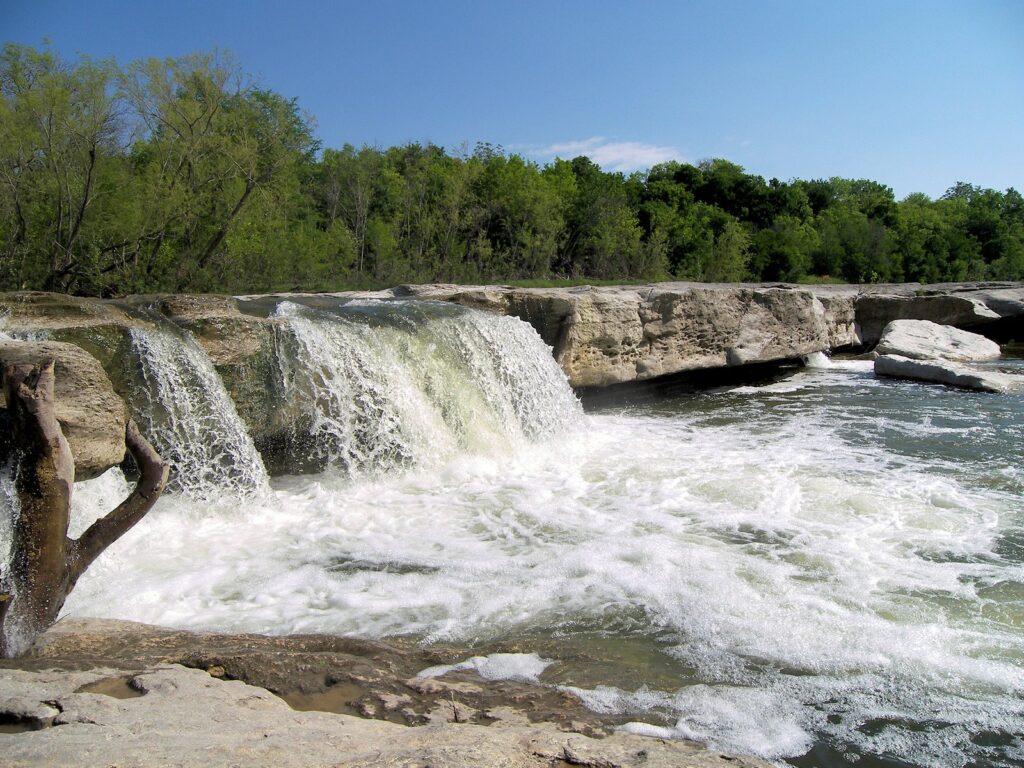
Just 13 miles from the Capitol, McKinney Falls is a state park inside the city, with limestone ledges on Onion Creek at the Upper and Lower Falls. Texas Parks and Wildlife allows swimming in the creek, but warns that it can flood after rain; call the park for current conditions. Entry is $6 for anyone 13 and up, and the park says day passes sell out every weekend and holiday, so reserve online or at (512) 389-8900. In the Upper and Lower Falls areas, food, alcohol, glass, coolers, speakers and hard balls are banned, and pets aren’t allowed in the water. The gate opens 8 a.m. to 10 p.m.
If you want to stay, the park has 81 campsites with water and electric hookups plus six cabins, but no wood fires: a burn ban has been in effect since August 11, 2026. Texas Parks and Wildlife also has a statewide alert for New World screwworm, issued in June 2026, and asks visitors to check their pets often.
Verdict: The closest thing to a Hill Country swim without leaving town. Reserve if it’s a weekend.
5. Emma Long Metropolitan Park (Lake Austin)
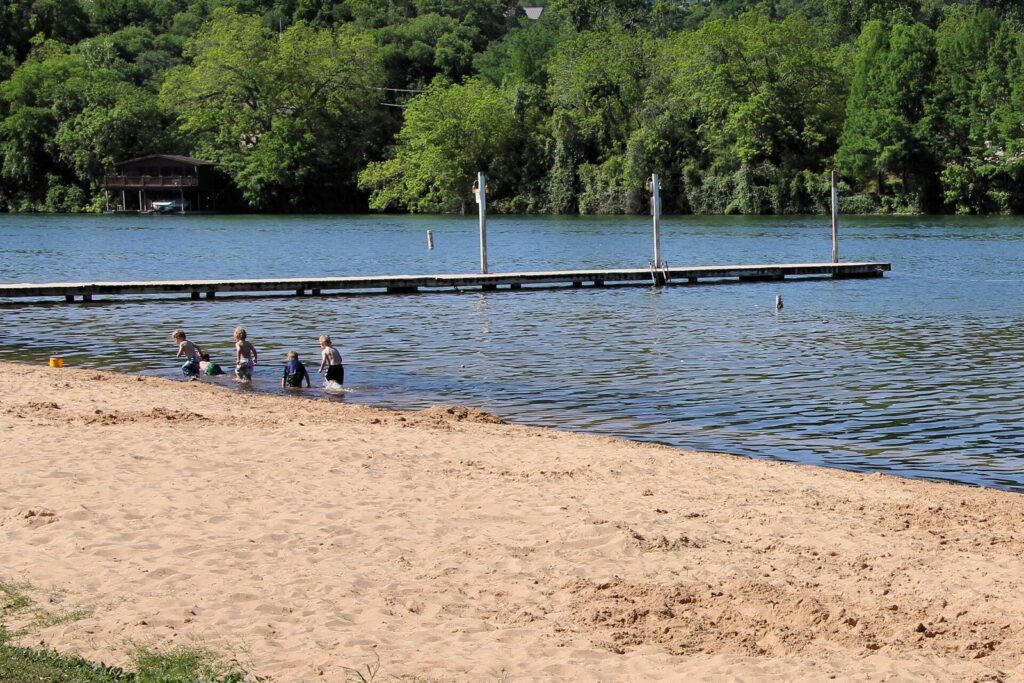
Emma Long is the City’s big park on Lake Austin, with a designated beach-entry swimming area, campsites, boat ramps and picnic sites. Gates open year-round from 7 a.m. to 10 p.m., and the park holds about 250 cars. On Fridays, weekends and holidays, the City strongly encourages buying day passes online; walk-ins are admitted until they sell out or the park fills. Monday through Thursday, you pay at the pay station with coins or a card. Remember the drawdown: no swimming from October 12 through November 30, 2026.
Verdict: The easiest real lake beach from central Austin. Buy the weekend pass the night before.
6. Hamilton Pool Preserve
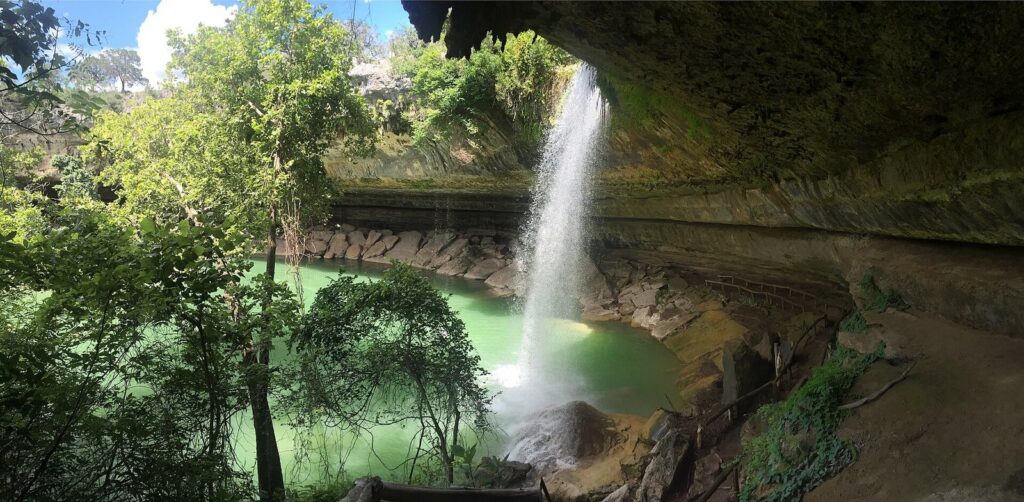
Hamilton Pool, a collapsed grotto west of Austin at 24300 Hamilton Pool Road in Dripping Springs, is the area’s most famous swimming hole, and seeing it takes planning. Travis County requires a reservation every day, in one of two slots: 9 a.m. to 12:30 p.m. or 2 to 5:30 p.m. The reservation is $12 per vehicle, covering up to eight people, and then you pay cash at the gate: $8 per adult, $3 per senior and nothing for kids 12 and under. All fees are non-refundable.
Water access is currently allowed only in a very limited part of the pool because of falling rocks, the trail under the overhang is closed, and swimming is never guaranteed: it depends on bacteria levels and recent rain. There’s no lifeguard (life vests are provided while supplies last), no drinking water and no concessions, pets aren’t allowed even in the car, and the quarter-mile trail down is steep and rugged. The water can drop below 50°F in winter and spring. Call the status line, 512-854-2581, which is updated by 8:30 a.m. daily.
Verdict: Go for the sight and treat a swim as a bonus. Take the morning slot and fill the car.
7. Lake Travis county parks
Lake Travis, the big reservoir behind Mansfield Dam, is where Austin goes for open water, and Travis County runs most of the public shoreline parks. At Pace Bend Park, Mudd Cove, Kate’s Cove and Gracy Cove are designated for swimming only. Hippie Hollow is the only clothing-optional public park in Texas, open only to adults 18 and older. None of the lake parks have lifeguards. The County also warns that zebra mussels have turned up along lake park shorelines, and their shells cut, so wear water shoes. Day-use fees are charged per person in cash at the entrance booth; call the parks office at 512-854-PARK for current amounts.
Verdict: The place for a full lake day with a car. Check the lake level before you pick a park.
8. Pedernales Falls State Park
About 30 miles west of Austin, Pedernales Falls is famous for its broad, tilted limestone falls, but you can’t swim or wade in the falls area. The designated swimming areas take a strenuous hike of at least a quarter mile with steep rock stairs. Entry is $6 for anyone 13 and up, the park often reaches capacity and turns away people without passes, and the gates close from 10 p.m. to 8 a.m. Texas Parks and Wildlife warns that the river can rise “from a placid stream to a raging torrent in a few minutes.” If the water rises or the sky darkens upstream, get out and climb.
Verdict: A superb day out, but come for the hiking and views, with a swim as a side dish.
9. Blue Hole Regional Park, Wimberley
About 45 minutes southwest of Austin, the City of Wimberley’s Blue Hole is a cypress-shaded swimming hole run on reservations. Its swim season runs daily from May 1 through Labor Day, then weekends in September, with half-day slots from 9 a.m. to 1 p.m. and 2 to 6 p.m.; reservations open March 1. The 2026 season is over, so this one’s for next summer. Nearby Jacob’s Well remains closed to swimming.
Verdict: A lovely summer swim if you book early. Pair it with a day in Wimberley.
Can you swim in Lady Bird Lake?
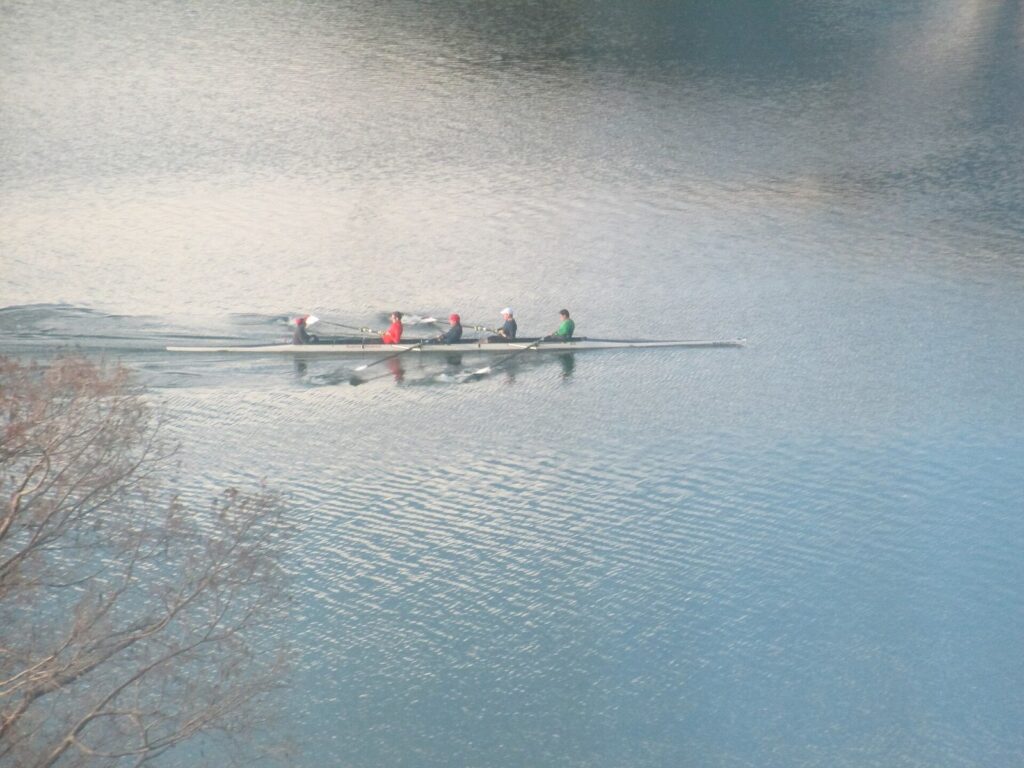
No. City code makes it illegal to “swim, bathe, wade or go into the waters of Lady Bird Lake,” except to rescue someone. The lake downtown is for paddling, rowing and looking at. Gas-powered boats aren’t allowed either; motorized craft are limited to small electric motors of 5 horsepower or less with City permission. That’s what makes it such a pleasant place to paddle.
Where to rent a kayak or paddleboard
The City lists six contracted rental concessions on the lake: Austin Rowing Club at the Waller Creek Boathouse, EpicSUP, The Expedition School, Rowing Dock, Texas Rowing Center and Zilker Park Boat Rentals. We checked current prices at two of them.
| Rental | Texas Rowing Center | Rowing Dock |
|---|---|---|
| Location | 1541 W. Cesar Chavez, behind Austin High School | 2418 Stratford Drive, west edge of Zilker Park |
| Hours | Daily, 6 a.m. until dusk | Daily, 9 a.m. to 8 p.m.; last boat out at 7 |
| Single kayak | $15 an hour, $35 a day | $20 an hour, $45 a day |
| Double kayak | $20 an hour, $45 a day | $25 an hour, $55 a day |
| Stand-up paddleboard | $25 an hour, $55 a day | $25 an hour, $55 a day |
| Canoe | $25 an hour, $55 a day | $30 an hour, $65 a day |
Both work on a walk-up basis. Bring a photo ID and a credit card; Texas Rowing Center includes life vests, and Rowing Dock signs your waiver at the dock. Rowing Dock says it takes 50 percent off rentals before 11 a.m. if you mention it at check-in. During ACL road closures, it says to reach the dock via Rollingwood Drive rather than Barton Springs Road.
Texas law, which the City cites, requires children under 13 to wear a Coast Guard-approved life jacket on paddlecraft, and adults must have one easily accessible. Keep dogs out of the water around Red Bud Isle, where the City reported algae mats this summer.
Lady Bird Lake, Lake Austin or Lake Travis: which lake is for what?
Austin’s three lakes are all dammed stretches of the Colorado River, and visitors mix them up constantly. They’re very different places.
| Lady Bird Lake | Lake Austin | Lake Travis | |
|---|---|---|---|
| Where | Downtown, between Tom Miller Dam and Longhorn Dam | West Austin, between Mansfield Dam and Tom Miller Dam | Northwest of the city, above Mansfield Dam |
| Swimming | Illegal | Yes, at Emma Long’s beach (not during the fall 2026 drawdown) | Yes, at county park coves; no lifeguards |
| Motorboats | No gas motors | Yes: wakeboarding, pontoons, cruising | Yes: the region’s big boating lake |
| Water level | Stable | Stable, apart from planned drawdowns | Swings widely with drought and flood |
| Best for | Kayaks, paddleboards, rowing, bat watching | Boat days, lake beach, Mount Bonnell views | Swimming coves, boating, sunsets |
Lake Austin
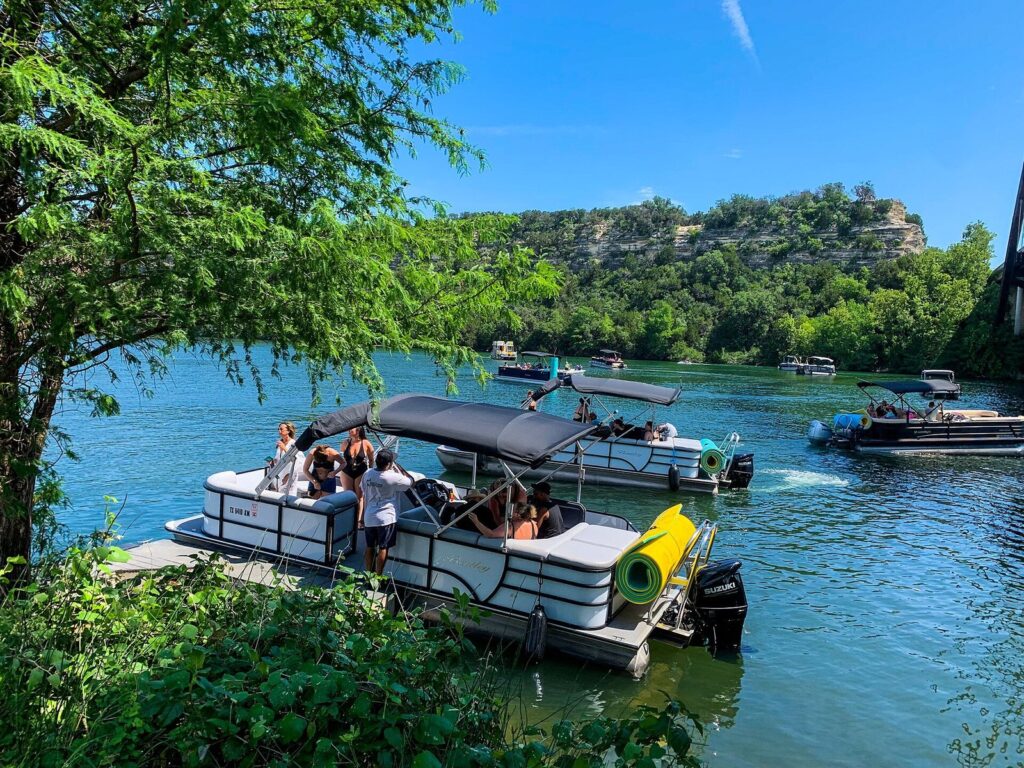
Lake Austin winds like a river through the western hills, past Mount Bonnell and under the Pennybacker Bridge. Its level normally holds steady, which makes it a reliable boating lake, and several companies rent pontoons and wake boats, with or without a captain. Public swimming is at Emma Long. The fall 2026 drawdown, from October 12 to November 30, lowers the lake, which affects boat ramps, docks and the swim beach.
Lake Travis
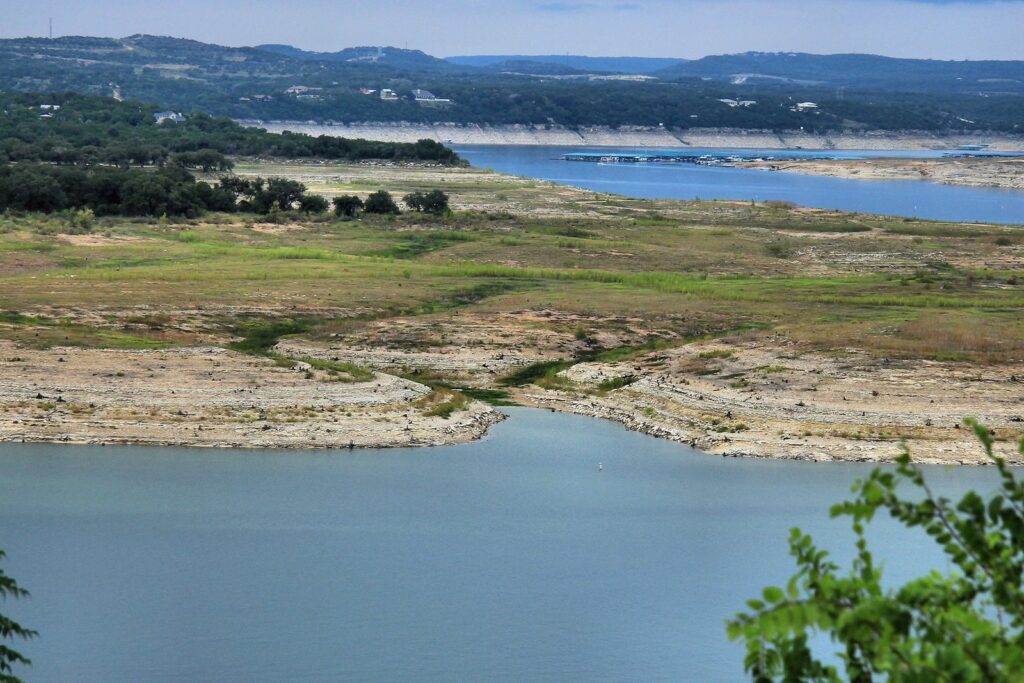
Lake Travis is a flood-control reservoir, and its level can swing by tens of feet between drought and flood. In the 2013 drought it sat about 50 feet below full, stranding docks and turning beaches into rock fields. After heavy rain it can fill within days. Before you plan a Lake Travis beach or boat day, check LCRA’s lake levels page: a park that’s perfect when the lake is full can be a long walk over rock when it’s low, and some ramps close at either extreme.
Renting a boat
Lake Austin and Lake Travis both have rental companies, from pontoons to wake boats, with or without a captain. Texas requires anyone born on or after September 1, 1993 to complete a boater education course before operating a personal watercraft or a boat with a motor over 15 horsepower, so younger drivers should bring proof or book a captain. Children under 13 must wear a life jacket while a boat under 26 feet is under way, and there must be one aboard for everyone else. Boating while intoxicated is a crime in Texas, with the same alcohol limit as driving. On Lake Austin, stay alert for wakeboarders and the narrow bends; on Lake Travis, watch for submerged hazards when the level is low.
How can you watch the bats from the water?
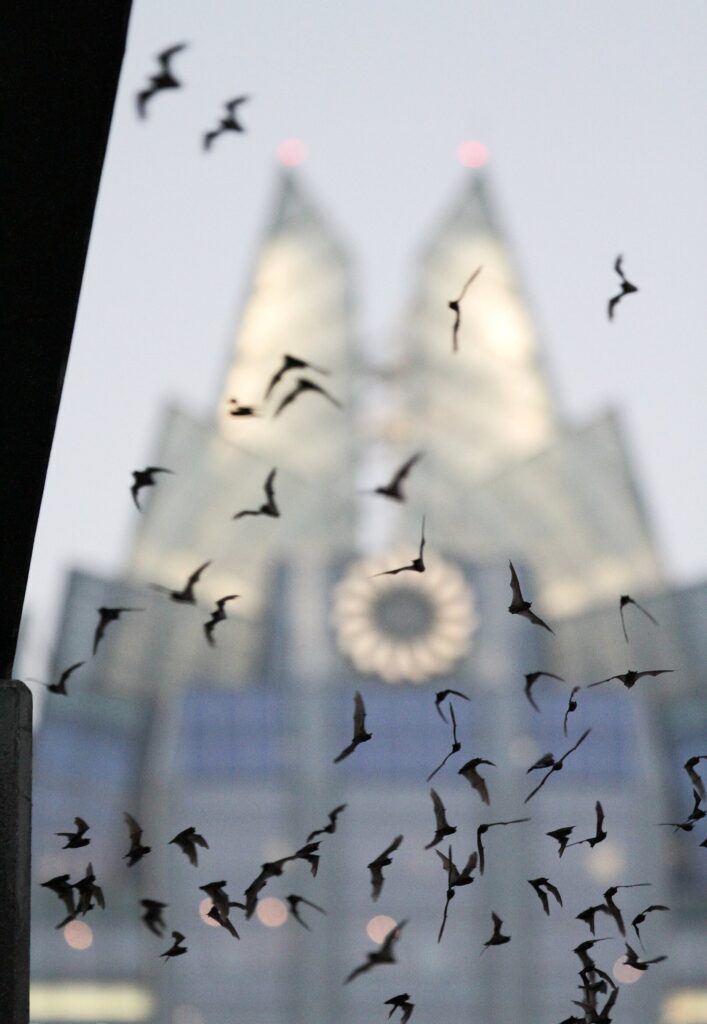
The Mexican free-tailed bats under the Ann W. Richards Congress Avenue Bridge emerge around sunset from spring into fall, and watching from the water is one of Austin’s best evenings out. Two companies run bat cruises from docks near the Hyatt Regency at 208 Barton Springs Road, on the south shore:
- Lone Star Riverboat: the hour-long Sunset/Bat Watching Cruise costs $15 for adults, $13 for seniors and military, $10 for children under 12 and nothing for under-2s, plus a $3 online convenience fee and 8.25 percent tax. It leaves about 30 minutes before sunset, and the operator says it sells out most nights. Its season runs from late February through early November.
- Capital Cruises: the Bat Watching Tour costs $14 for adults, $11 for seniors and $9 for children 3 to 12, plus tax and a $3 online fee. It also departs about 30 minutes before sunset and lasts about an hour; check in 30 to 45 minutes ahead.
A rented kayak is the cheaper, quieter option: paddle to the bridge before sunset, keep well clear of the tour boats, and carry a light for the paddle back, since you’ll return in the dark. Watch without disturbing them: no white lights shone on the bats, no loud noise near the bridge, and never touch a bat, even one on the ground. If anyone is bitten, wash the wound with soap and water and see a doctor.
Where can you go tubing near Austin?
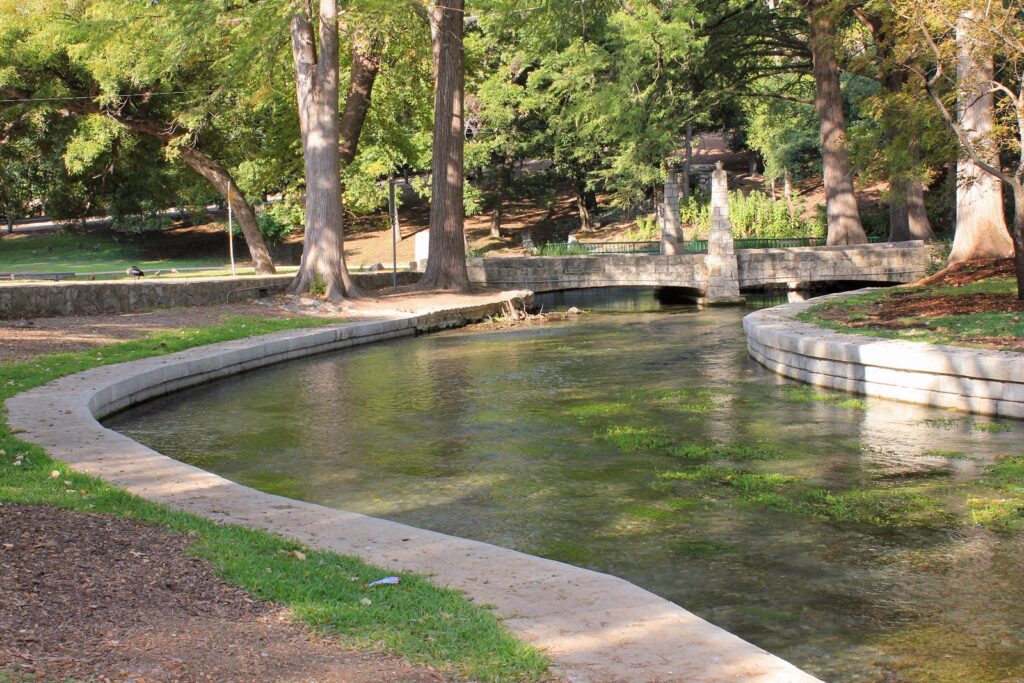
Austin doesn’t tube within the city. The classic floats are south along I-35: the San Marcos River in San Marcos, about 30 to 40 minutes away, and the Comal and Guadalupe rivers around New Braunfels, about 45 to 60 minutes away. Outfitters rent tubes and run shuttles in the warm months, and each river has its own rules.
- Comal River: New Braunfels bans disposable containers on the river, including cans, plastic bottles, glass and foam, with fines of up to $500 and a limit of one 30-quart cooler with a locking lid per person.
- San Marcos River: the City of San Marcos bans single-use drink containers on its stretch of the river, so bring reusable bottles.
- Guadalupe River: the stretch below Canyon Lake has fewer container rules, but no glass or foam.
These rules come from each city’s ordinances and are summarized by Texas Highways and the outfitters; check the city’s current river rules before you pack. River flows change with rain and dam releases, so ask your outfitter about conditions on the day. Our guide to day trips from Austin covers San Marcos, New Braunfels and Wimberley beyond the water.
How do you stay safe in Austin’s water?
Central Texas water is beautiful and unforgiving. Most of the dangers come from how fast conditions change.
- Flash floods. Hill Country creeks and rivers can rise in minutes, and the deadly floods of July 2025 on the Guadalupe River upstream in Kerr County showed how quickly. Never cross flooded water on foot or by car, watch the sky upstream, and get out of a creek bed at the first sign of rising or muddy water.
- Algae and bacteria. The City advises staying out of natural water that’s warm or stagnant, shows scum, film or algae, or has had rain in the past three days. Don’t drink from natural water bodies, and rinse skin and fur after contact. Six dog deaths in Austin have been blamed on algae toxins since 2019, so keep dogs out of water with visible mats. If someone falls ill after exposure, call poison control at 1-800-222-1222.
- No lifeguards. Only the City pools have lifeguards, and only during guarded hours. The Greenbelt, Hamilton Pool, the state parks and the lake parks are swim-at-your-own-risk.
- Life jackets. Children under 13 must wear one on paddlecraft, and every adult needs one within reach. On lakes and rivers, wear it.
- Cold water and sharp edges. Hamilton Pool can drop below 50°F in winter and spring. Zebra mussels on Lake Travis shorelines cut bare feet, and limestone ledges are slick.
- Heat. Summer afternoons are routinely in the high 90s. Bring more water than you think, and swim before noon when you can.
Where can you swim with a dog in Austin?
Fewer places than dog owners hope. Barton Springs Pool bans pets outright, Hamilton Pool doesn’t allow pets even if they stay in the car, and at McKinney Falls pets aren’t allowed in the water at the Upper and Lower Falls. On the Barton Creek Greenbelt, dogs must be on a leash 6 feet long or shorter, and many owners let them cool off in the creek when it’s running.
Be careful with lake water. Red Bud Isle, the leash-free island park on Lady Bird Lake below Tom Miller Dam, is one of the two places where the City reported thick algae mats this summer, and six dog deaths in Austin have been blamed on algae toxins since 2019. The City’s advice: keep dogs out of warm, stagnant or scummy water and out of any water for three days after rain, rinse their fur after any swim, and don’t let them lick their coat before you do. If a dog shows symptoms after swimming, call a vet at once.
Swimming in Austin with kids
Families have it easy here. Deep Eddy is the calmer pool, Barton Springs charges $4 for a non-resident child aged 1 to 11, and state parks and Hamilton Pool are free for kids 12 and under. The City also runs 10 splash pads with no entry fee, open from May through October, including Metz, Clarksville and Ricky Guerrero; the City aquatics office is at (512) 974-9332. Life jackets are a must for under-13s on any paddlecraft. Our guide to Austin with kids has more family days out, and our guide to Austin on a budget lists the free and cheap swims.
When is swimming season in Austin?
Barton Springs is a year-round swim, at 68 to 70 degrees in any month, and its devotees go in January. For everything else, the season runs roughly from spring break through October. The City charges fees at Barton Springs, Deep Eddy and its other fee pools from spring break through the end of October. Hill Country swimming holes are best from late spring into early fall, when the air is hot enough to make cold water welcome and the creeks still have flow from spring rain. July and August are the hottest months, and the most crowded at every swimming hole. For the full picture of seasons, heat and festivals, see our guide to the best time to visit Austin.
Getting to the water is part of the plan. Barton Springs is on CapMetro Route 30 and within walking or biking distance of downtown along the lake trail; everything west of MoPac is easier by car. Our guide to getting around Austin covers buses, bikeshare and parking.
A perfect Austin water day
You can build a full day around water without a car. Here’s a plan with the costs we checked.
| When | What | Cost |
|---|---|---|
| 8 a.m. | Swim at Barton Springs when the lifeguards come on (not a Thursday) | $9 |
| 10 a.m. | Walk to Rowing Dock on the west edge of Zilker Park and rent a kayak before 11 a.m., when it offers half off | $20 an hour, before the discount |
| Noon | Tacos and shade; the pool and the lake are best before the afternoon heat | Your call |
| Afternoon | Deep Eddy for a second swim, or a nap | $9 |
| Sunset | A bat cruise from the Hyatt Regency docks, about 30 minutes before sunset | $14 to $15 plus fees and tax |
With a car, swap the morning for a Hamilton Pool reservation (the 9 a.m. slot) and the afternoon for McKinney Falls on the drive back, then catch the bats downtown.
Austin swimming holes and lakes FAQ
Can you swim in Lady Bird Lake?
No. Austin City Code makes it illegal to swim, bathe, wade or go into Lady Bird Lake except to rescue someone. The lake is for kayaking, paddleboarding, rowing and bat-watching cruises. To swim near downtown, go to Barton Springs Pool in Zilker Park, a short walk or bike ride along the lake trail, or to Deep Eddy Pool near Lake Austin Boulevard.
Is Barton Springs Pool open year-round?
Yes. The spring-fed pool averages 68 to 70 degrees and opens daily from 5 a.m. to 10 p.m., except on Thursdays, when it closes from 9 a.m. to 7 p.m. for cleaning. It can close without notice after floods. A non-resident adult pays $9. Check the City’s closures page or call 512-974-6300 after heavy rain.
Do you need a reservation for Hamilton Pool?
Yes, every day. Travis County sells $12 vehicle reservations online for a morning slot (9 a.m. to 12:30 p.m.) or an afternoon slot (2 to 5:30 p.m.), and you pay $8 per adult in cash at the gate. Fees are non-refundable, and only a limited part of the pool is open for swimming because of falling rocks.
Is Jacob’s Well open for swimming?
No. Hays County suspended swimming at Jacob’s Well in Wimberley in June 2022 because of low groundwater, and it stayed closed through 2026. For a Wimberley swim, the City of Wimberley’s Blue Hole Regional Park takes reservations for a season that runs daily from May 1 through Labor Day, then weekends in September.
Where can you swim in Lake Travis?
Travis County runs the main public shoreline parks. Pace Bend Park has three coves set aside for swimming, and Hippie Hollow is a clothing-optional park for adults 18 and older. There are no lifeguards at any of them, fees are paid per person in cash, and the lake’s level swings widely, so check LCRA’s lake levels before you go.
Are there free swimming holes in Austin?
Yes, when there’s water. The Barton Creek Greenbelt’s swimming holes, including Twin Falls and Sculpture Falls, are free, but they only flow after good rain, and the City warns that levels change quickly. The City’s 10 splash pads are free from May through October. Barton Springs, Deep Eddy and the state parks all charge.
What’s the best swimming hole near Austin?
For reliability, Barton Springs Pool: it’s spring-fed, 68 to 70 degrees all year and open most days from 5 a.m. to 10 p.m. For a wilder swim, McKinney Falls and the Greenbelt are best after rain, and Hamilton Pool is the most famous, though it needs a reservation and only part of it is open for swimming right now.
Related Austin Guides
- Things to Do in Austin: where swimming fits among the city’s best sights.
- Day Trips from Austin: Wimberley, San Marcos, New Braunfels and the Hill Country towns near the water.
- Best Time to Visit Austin: heat, rain and festival seasons, month by month.
- Austin with Kids: family days out, splash pads included.
- Austin on a Budget: the free and cheap swims, and other ways to save.
Sources and verification
Hours, fees, reservation rules, closures and safety guidance in this guide were checked on September 23, 2026 against the City, county and state agencies and the operators listed below. The guide is compiled from these official sources rather than from other travel lists, and it doesn’t claim first-hand visits. Water conditions change daily; always check the operator’s status before you go.
- City of Austin: Barton Springs Pool, Deep Eddy Pool, Pools and splash pads, Pool fees, Barton Creek Greenbelt, Emma Long Metropolitan Park, Lady Bird Lake, Algae in Austin’s waterways, Parks closures, Barton Springs retaining-wall project
- Travis County Parks: Hamilton Pool Preserve, Pace Bend Park, Hippie Hollow Park, Mansfield Dam Park
- Texas Parks and Wildlife Department: McKinney Falls State Park, Pedernales Falls State Park
- Wimberley: Blue Hole Regional Park, Jacob’s Well Natural Area listing
- Paddling and cruises: Texas Rowing Center, Rowing Dock, Lone Star Riverboat, Capital Cruises
- Bats: Bat Conservation International, Austin Bat Refuge
- Tubing rules: Texas Highways river-floating guide
Photo credits
- Deep Eddy Pool, 2014: photo by Larry D. Moore, Wikimedia Commons (CC BY 4.0)
- McKinney Falls State Park: photo by Larry D. Moore, Wikimedia Commons (CC BY 4.0)
- Emma Long Metropolitan Park beach, 2014: photo by Larry D. Moore, Wikimedia Commons (CC BY 4.0)
- Hamilton Pool Preserve: photo by jcutrer, Wikimedia Commons (CC BY-SA 4.0)
- Rowers on Lady Bird Lake, 2013: photo by No machine-readable author provided. Billy Hathorn assumed (based on copyright claims)., Wikimedia Commons (CC BY-SA 3.0)
- Pontoon boats on Lake Austin, 2023: photo by Wake Riderz Boat Rental Lake Austin, Wikimedia Commons (CC BY-SA 4.0)
- Lake Travis during the 2013 drought: photo by Larry D. Moore, Wikimedia Commons (CC BY 4.0)
- Bats at the Congress Avenue Bridge: photo by Dan Pancamo, Wikimedia Commons (CC BY-SA 2.0)
- Comal River in Landa Park, New Braunfels, 2015: photo by Larry D. Moore, Wikimedia Commons (CC BY 4.0)
- Barton Springs Pool (featured image): photo by Ligocsicnarf89, Wikimedia Commons (CC BY 4.0)