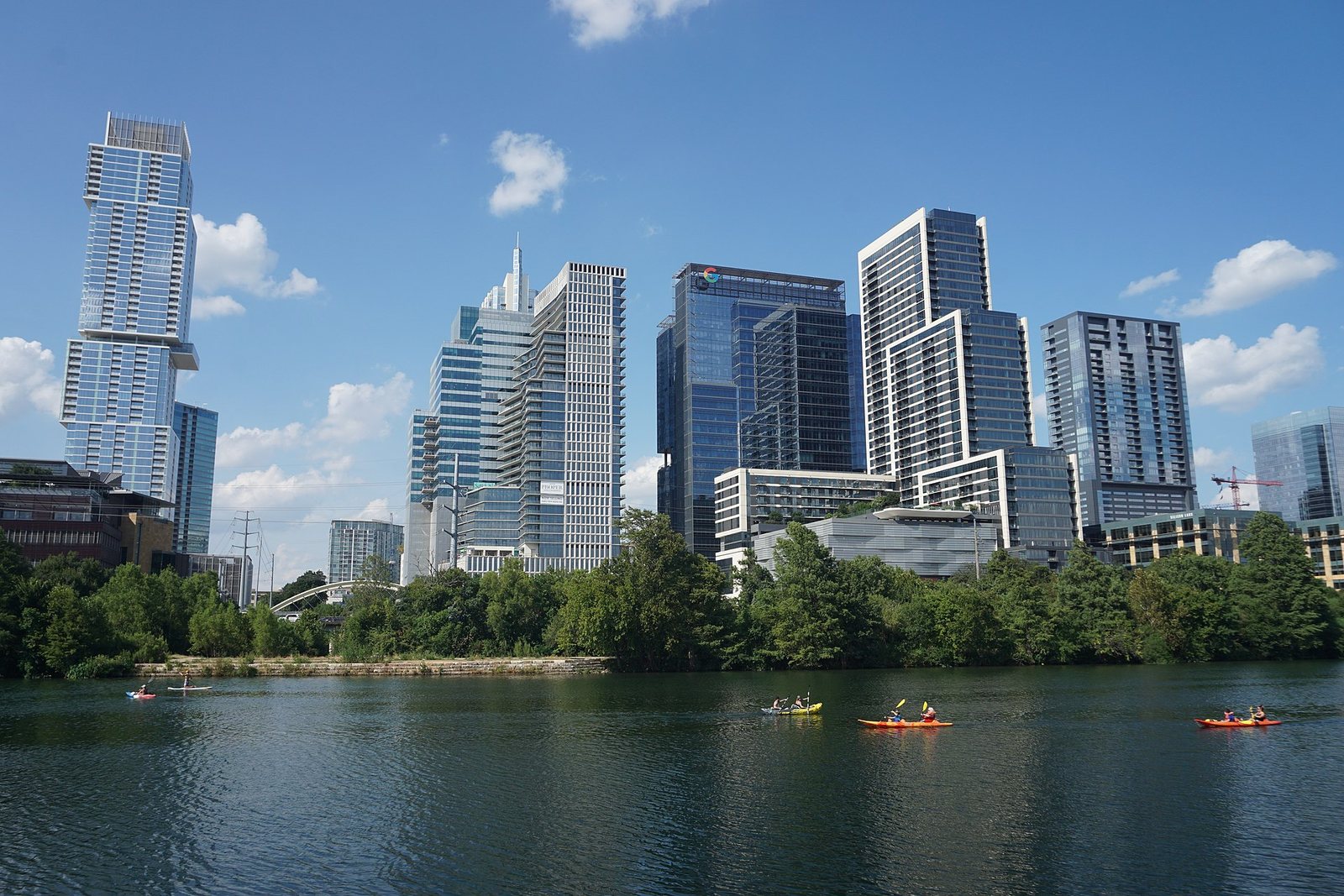
The Austin attractions worth planning a trip around are an odd, likable mix: a sunset-red granite capitol you can wander for free, roughly 1.5 million bats pouring out from under a downtown bridge at dusk, a spring-fed pool that holds 68 to 70 degrees all year, and a lake through downtown that you can paddle but can’t legally swim in. Add a night of live music, the museums north of the Capitol, Mount Bonnell at sunset and, in spring, the Wildflower Center, and you have the core of a first visit.
This guide ranks those places by payoff, groups them by part of town, and gives each one a straight answer on cost, timing and whether it deserves your time. One caveat shapes everything: Austin’s normal daily high sits at 90°F or above from late May until late September, so the outdoor sights belong to mornings and evenings. Prices, hours and closures were checked against official sources on September 23, 2026.
What’s closed or different right now?
Early fall is a great time to visit and a busy one. As of September 23, 2026:
- ACL Festival takes over Zilker Park on October 2–4 and 9–11. The Great Lawn is fenced off from September 21 to October 18, several Zilker lots are closed, and Zilker Botanical Garden and the UMLAUF Sculpture Garden shut on festival weekends. Barton Springs Pool stays open, but on those weekends you can only get in from Azie Morton Road.
- Formula 1 arrives October 23–25 for the U.S. Grand Prix at Circuit of The Americas. If your trip overlaps, book your room early.
- The UT Tower is under scaffolding until about summer 2027, and its observation deck tours are suspended.
- The earliest surviving camera photograph is off view at the Harry Ransom Center through October 15.
- Lake Austin will be drawn down from October 12 to November 30, so the view from Mount Bonnell will show a lower lake.
- No Governor’s Mansion tours run in October. The next posted dates are November 10–12, booked at least a week ahead.
- The Paramount Theatre is closed for its first full restoration in nearly 50 years.
Austin attractions at a glance
Costs are for one adult visiting from out of town, checked on September 23, 2026. “Book ahead” means you risk being turned away without a reservation.
| Attraction | Area | Cost | Allow | Best time | Book ahead? |
|---|---|---|---|---|---|
| Texas State Capitol | Downtown | Free | 1–2 hours | Weekday morning | No (groups of 10+ do) |
| Congress Avenue Bridge bats | Downtown | Free from the bridge; cruises $14–$15 plus tax | 1 hour at dusk | Sunset, March–October; best late July to mid-September | Cruises only |
| Barton Springs Pool | Zilker | $9 (fees apply March–October) | 2–3 hours | Weekday morning; closed Thursday 9 a.m.–7 p.m. | No |
| Lady Bird Lake and the Butler Trail | Downtown and Zilker | Trail free; single kayak $15–$20 an hour | 1–3 hours | Sunrise or evening | No, walk-up |
| South Congress Avenue | South Austin | Free to walk | 2–3 hours | Late afternoon into evening | No |
| Bullock Texas State History Museum | Capitol Complex | $22; free first Sunday | 2–3 hours | Midday, any day | Optional |
| Blanton Museum and Ellsworth Kelly’s Austin | UT campus | $15; free Tuesday | 1.5–2 hours | Midday; closed Monday | No |
| LBJ Presidential Library | UT campus | $16; half price Tuesday | 1.5–2 hours | Any day, 9 a.m.–5 p.m. | No |
| Harry Ransom Center | UT campus | Free | 45–60 minutes | Tuesday–Sunday | No |
| Mount Bonnell | West Austin | No fee posted | 30–60 minutes | Sunrise or sunset | No |
| Lady Bird Johnson Wildflower Center | Southwest Austin | $15 Monday–Thursday, $18 Friday–Sunday | 2–3 hours | Early April for bluebonnets | Strongly encouraged |
| McKinney Falls State Park | Southeast Austin | $6 (12 and under free) | Half day | Weekday, after rain | Yes, for weekends |
| Live music venues | Across town | Varies; Elephant Room cover $5–$10 | An evening | After 8 p.m. | Ticketed shows only |
| Hamilton Pool Preserve (day trip) | West of Austin | $12 per vehicle plus $8 cash per adult | Half day | Morning slot | Required |
The best Austin attractions, ranked by payoff
The order weighs how much of Austin each place shows you against what it costs in time, money and sweat. With only a weekend, the first five cover the essentials.
1. Texas State Capitol
Start here: it’s free, it’s air-conditioned, and it’s better than it needs to be. Dedicated in 1888, the Capitol is built of Texas Sunset Red granite from Granite Mountain in Burnet County, hence the warm pink tone, and it stands 302.64 feet to the tip of the Goddess of Liberty’s star, 14.64 feet taller than the U.S. Capitol. From the center of the rotunda, the star at the top of the dome is about 218 feet above you.
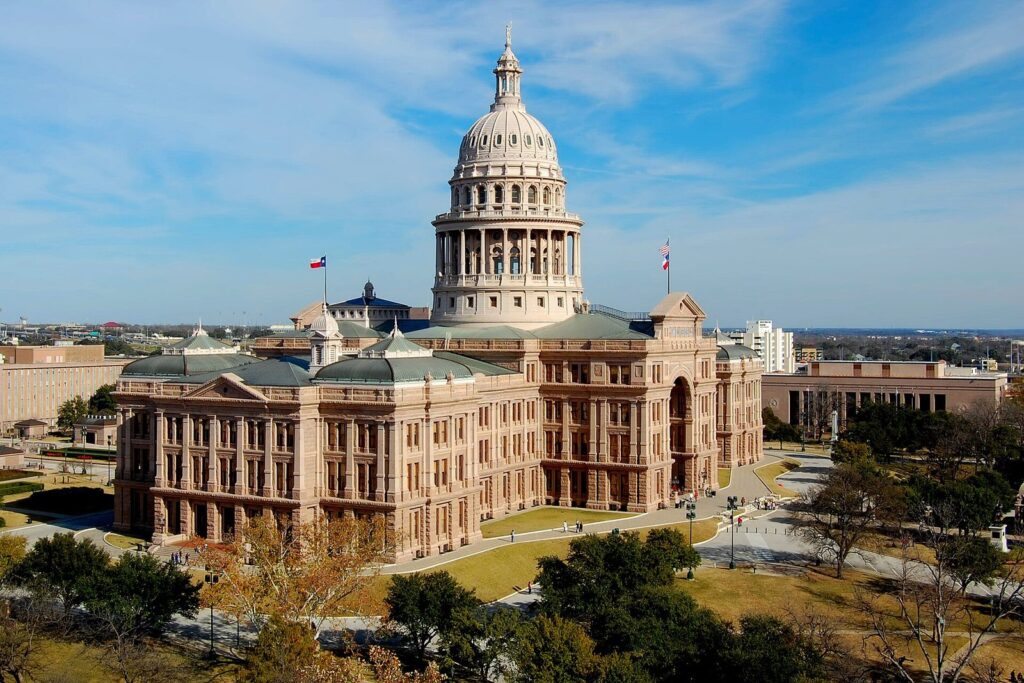
Free guided tours leave the South Foyer every 15 to 30 minutes and last about 40 minutes, running 9 a.m. to 4:15 p.m. Monday through Saturday and noon to 4:15 p.m. on Sunday. The building itself is open 7 a.m. to 8 p.m. on weekdays and 9 a.m. to 8 p.m. on weekends, and a free self-guided brochure waits at the north entry, which is also the accessible entrance. Expect security screening. On the southeast corner of the grounds, the Capitol Visitors Center fills the 1850s General Land Office building, the oldest state office building in Texas. It’s free as well, and its exhibits include a LEGO Capitol of about 65,000 bricks.
Parking: the visitor garage at 1201 San Jacinto Blvd. is free for two hours on weekdays, then $1 per half hour up to $12; weekend rates vary, reaching $25 during events. Verdict: worth it for everyone, and the best free tour in town.
2. The bats of the Congress Avenue Bridge
From roughly March through October, about 1.5 million Mexican free-tailed bats roost under the Ann W. Richards Congress Avenue Bridge and stream out at dusk to feed. It’s a maternity colony: pups are born in early June, and once they fly with the adults in late summer the emergence is at its biggest, which makes August the surest bet. The Austin Bat Refuge rates March to early May and late July to mid-September as the best windows, while Merlin Tuttle’s Bat Conservation calls mid-May through June the least likely time to see a good flight.
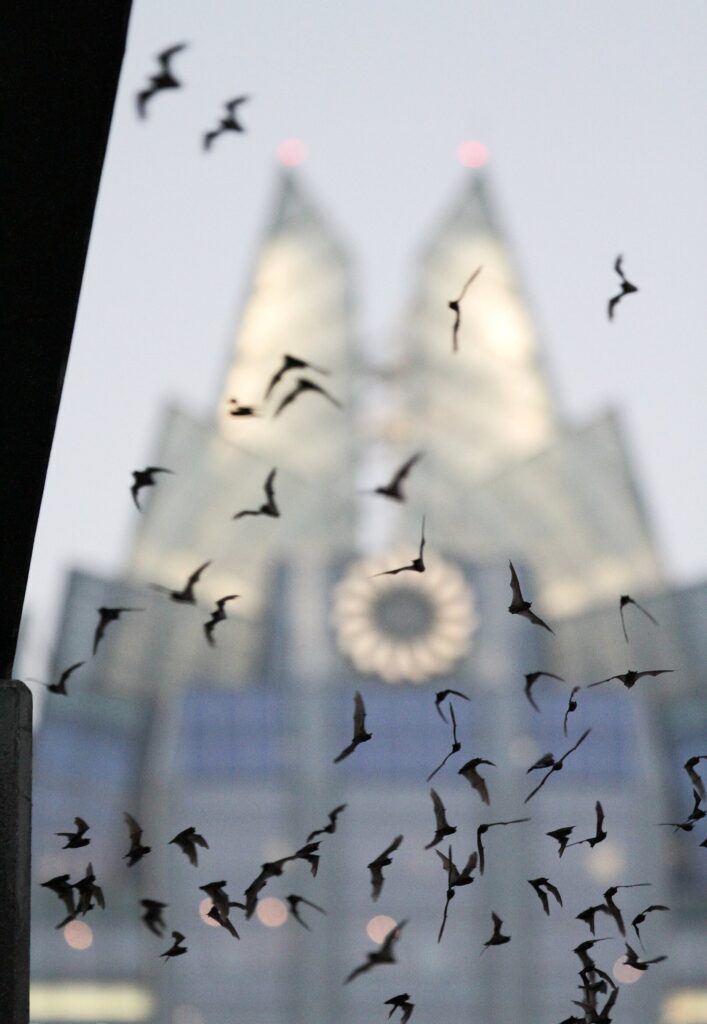
The flight usually starts around sunset, up to half an hour before it on hot, dry evenings and as much as 40 minutes after on cool, damp ones. The Austin Bat Refuge posts a nightly forecast; for September 23 it predicted 7:20 to 7:50 p.m. Watch free from the bridge sidewalk, which fills early, or from the lawn at the Statesman Bat Viewing Area on the southeast bank, which gained new “Bat City” interpretive signs in August 2026. Lone Star Riverboat ($15 per adult) and Capital Cruises ($14) run one-hour cruises from docks beside the Hyatt Regency at 208 Barton Springs Road, leaving about 30 minutes before sunset. Add tax and a $3 fee for booking online, and expect popular nights to sell out.
Verdict: unmissable from late July to mid-September, a gamble in June, and a long shot in winter, when only a fraction of the colony stays. Don’t shine white lights at the bats or touch one on the ground, and call 3-1-1 if a person or pet may have been bitten.
3. Barton Springs Pool and Zilker Park
Barton Springs is a spring-fed pool in Zilker Park that stays at 68 to 70°F year-round: bracing in August, oddly pleasant on a winter morning. It’s open 5 a.m. to 10 p.m. daily except Thursday, when it closes from 9 a.m. to 7 p.m. for cleaning. From March through October a day ticket costs $9 for non-resident adults ($5 for residents), $5 for ages 12 to 17 and $4 for children 1 to 11, and honorably discharged veterans swim free. Buy online, at the entrance kiosks or with cash at the window.
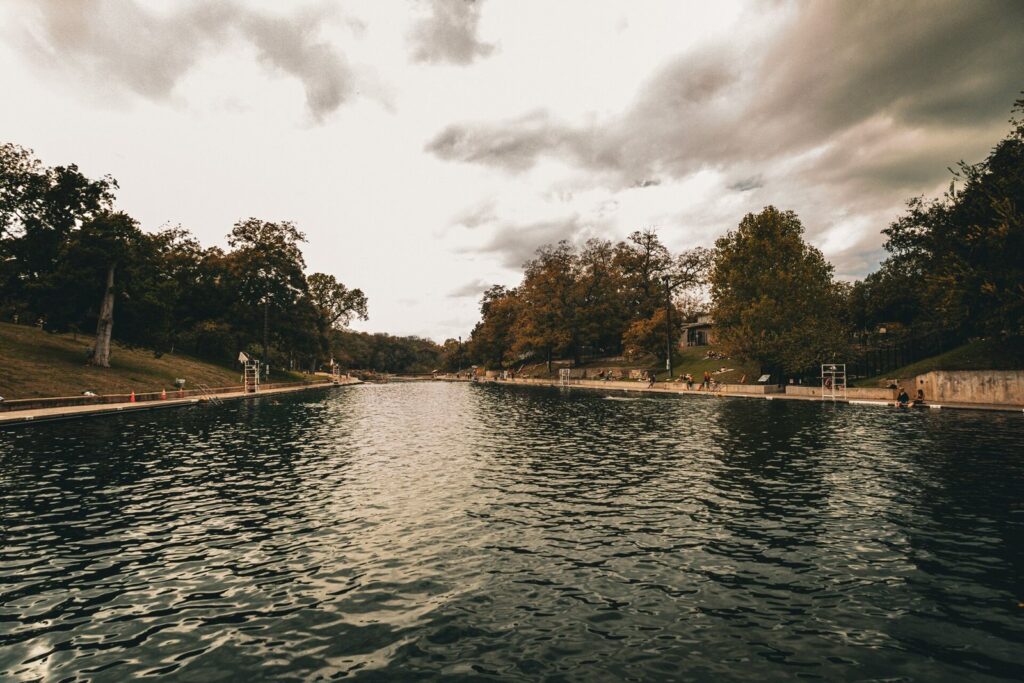
This season the renovated bathhouse has only partly reopened (the restrooms and showers work; the rotunda entrance is still under construction), and a retaining-wall repair along the east side runs into early 2027 while the pool keeps normal hours. Heavy rain can close it without notice, so check the City’s park closures page before a special trip, and leave food, coolers, glass and pets behind.
Zilker Park’s 350-plus acres also hold Zilker Botanical Garden ($8 for non-resident adults, 9 a.m. to 5 p.m. from September through May) and the Zilker Eagle mini train ($6 plus tax, Friday through Tuesday). Across Azie Morton Road from the pool, the UMLAUF Sculpture Garden + Museum ($8) opens Tuesday through Friday from 10 a.m. to 4 p.m. and weekends from 11 a.m. to 4 p.m. Pool parking is free on weekdays and $3 an hour on weekends and holidays from spring through Labor Day.
Verdict: essential if you like cold water, and best on a weekday morning. Deep Eddy Pool, which the City calls the oldest swimming pool in Texas, is the other classic swim ($9 for non-resident adults, closed Tuesdays).
4. Lady Bird Lake and the Butler Trail
Lady Bird Lake is the dammed stretch of the Colorado River that runs through downtown, and the Ann and Roy Butler Hike-and-Bike Trail circles it for about 10 miles, including a boardwalk of roughly 1.3 miles over the water on the south shore (open 5 a.m. to midnight). Several bridges cross the lake downtown, so shorter loops are easy.
Swimming in the lake is illegal under City code, and gas-powered boats are banned, which leaves the water to paddlers. Rentals are walk-up. Texas Rowing Center (1541 W. Cesar Chavez St., 6 a.m. until dusk) charges $15 an hour for a single kayak and $25 for a paddleboard, and the Rowing Dock (2418 Stratford Dr., 9 a.m. to 8 p.m.) charges $20 and $25, with half price before 11 a.m. if you ask at check-in. Bring photo ID and a credit card; children under 13 must wear a life jacket.
Expect construction detours on the north shore this fall and winter, around Rainey Street and I-35 and near Brazos Street. Keep dogs out of the water: the City has reported potentially toxic blue-green algae on Lady Bird Lake and links six dog deaths since 2019 to algae toxins. Verdict: the trail at 7 a.m. is Austin at its best and costs nothing, and an hour in a kayak is the best-value outing in town.
5. South Congress Avenue
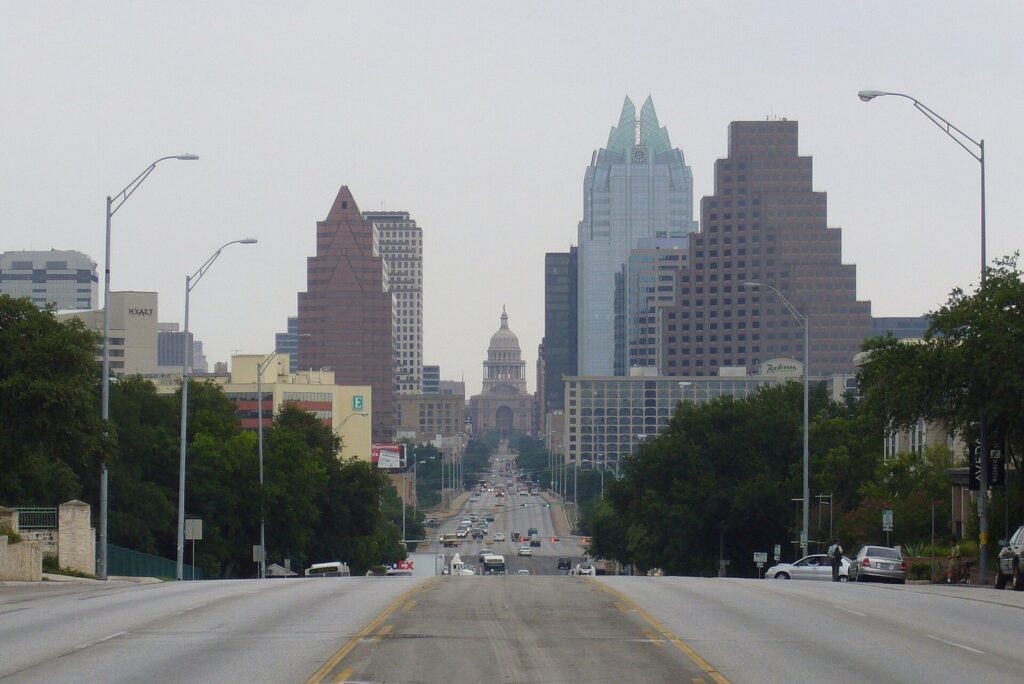
South Congress, or SoCo, is Congress Avenue south of the river, and its famous view points the other way: from the rise south of the lake, the Capitol sits at the far end of the avenue between downtown towers. Allens Boots (1522 S. Congress Ave., open since 1977) stocks thousands of pairs, and trying some on costs nothing. Jo’s Coffee (1300 S. Congress Ave.), sister to the Hotel San José next door, wears the “i love you so much” mural on its outside wall, and across the street the Continental Club (1315 S. Congress Ave., open since 1955) usually runs an early show at 6:30 p.m. and later sets from around 10.
A few blocks west, the “Greetings from Austin” postcard mural still covers the wall at 1720 S. First St., at Annie Street. The South Congress Hotel closed in late May 2026 for a renovation and is due back in spring 2027 as The Standard; only its Mañana coffee shop is open in the meantime.
Verdict: come in the late afternoon, as the shade lengthens, and stay for the Continental Club’s early show. At 2 p.m. in August the sidewalk is a griddle. SoCo is about two miles from the Capitol across the Congress Avenue Bridge, and buses run the length of the avenue.
6. Live music, any night of the week
Austin’s music is spread across town, and the best nights start with a room rather than a street:
- The Continental Club (1315 S. Congress Ave.) runs an early happy-hour show and late sets most nights, plus weekend matinees. Its residencies change, so check the calendar.
- The Broken Spoke (3201 S. Lamar Blvd.) is an old-school Texas dance hall with two-step and swing lessons Wednesday through Saturday at 8 p.m. and a free restaurant-side show Tuesday through Saturday from 6 to 8 p.m. It’s closed Sunday and Monday.
- The Elephant Room (315 Congress Ave.) is a 21-and-over basement jazz club with music every night since 1991. Cover is $5 to $10, and there’s none before 8 p.m.
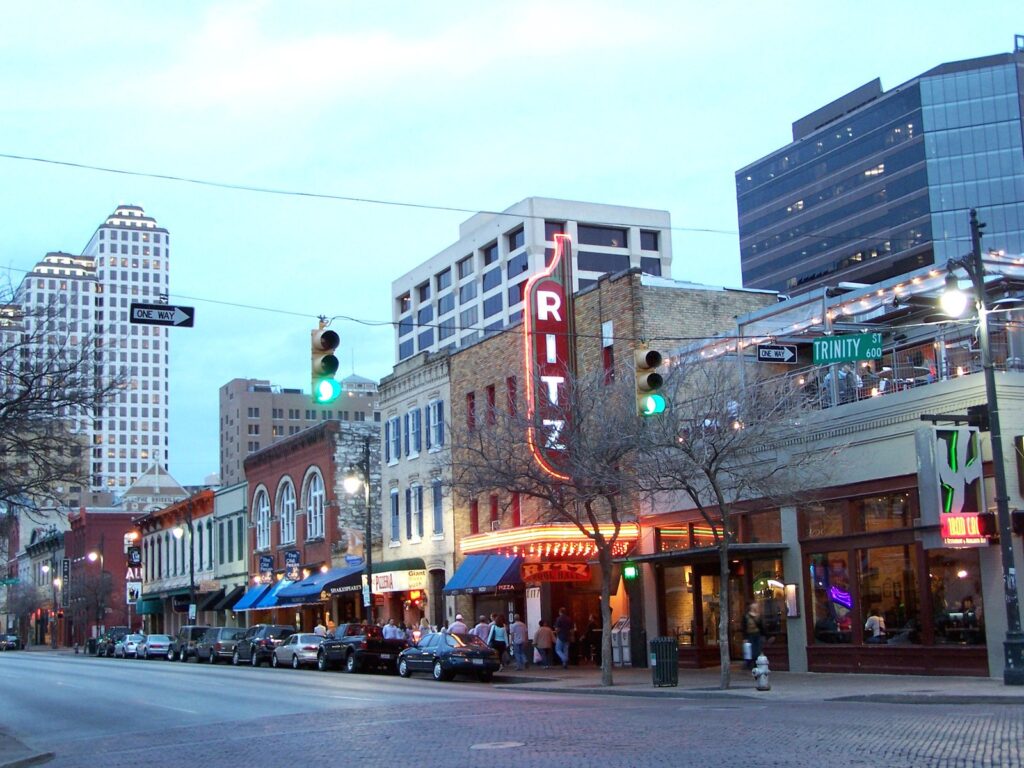
The one ticket money can’t buy is a seat at an Austin City Limits TV taping at ACL Live at the Moody Theater. Passes are free, given out by online drawings announced about a week before each taping, and even a pass doesn’t guarantee a seat. Sixth Street is the best-known bar strip, fun for a crowd but hit-and-miss for music; for original bands, check the club calendars along Red River Street.
Verdict: pick the venue before the street. With one night, the Continental Club’s early show followed by a late set at the Elephant Room makes a strong start.
7. The museum row: Bullock, Blanton, LBJ Library and Ransom Center
North of the Capitol, four serious museums sit within about a mile of each other, the obvious answer to a 100-degree afternoon.
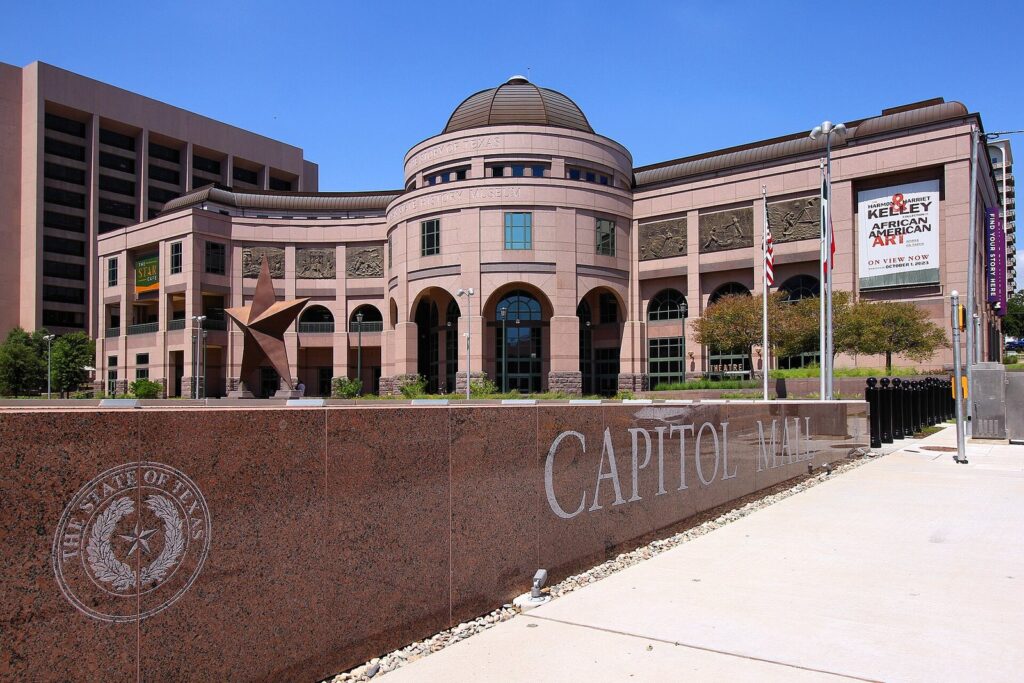
Bullock Texas State History Museum (1800 N. Congress Ave.) is the best single introduction to the Texas story. It’s open daily 10 a.m. to 5 p.m.; admission is $22 for adults and $16 for ages 6 to 17, and the exhibitions are free for everyone on the first Sunday of each month (the next is October 4). IMAX films cost $10 to $17 extra, and the garage is $15 a day.
Blanton Museum of Art (200 E. Martin Luther King Jr. Blvd.) includes Ellsworth Kelly’s Austin in its $15 ticket: a 2,715-square-foot chapel-like building of stone and colored glass, completed in 2018 and the only building Kelly designed. Check in at the Blanton’s Smith Building first. The museum is open 10 a.m. to 5 p.m. Tuesday through Sunday (until 8 p.m. on Saturday), closed Monday, and free every Tuesday.
LBJ Presidential Library (2313 Red River St.) is open daily from 9 a.m. to 5 p.m., with last admission at 4. Tickets are $16 and half price on Tuesdays, and parking is free in UT lot 38. Its fourth-floor permanent exhibit reopened in March 2026 after a multimillion-dollar renovation.
Harry Ransom Center (300 W. 21st St.) is free and keeps one of the world’s 20 complete Gutenberg Bibles always on view. The galleries open Tuesday through Friday from 10 a.m. to 5 p.m. and weekends from noon to 5 p.m. Niépce’s 1827 heliograph, the earliest surviving photograph made with a camera, is off view through October 15.
Tuesday is the cheap day: the Blanton is free and the LBJ Library is half price, which saves an adult $23. Monday is the worst: the Blanton, the Ransom Center galleries and the Texas Science & Natural History Museum (the former Texas Memorial Museum) are all closed. Verdict: with time for only one, pick the Bullock for Texas history or the Blanton for Austin. The LBJ Library is the choice for anyone drawn to the 1960s.
8. Mount Bonnell and Mayfield Park
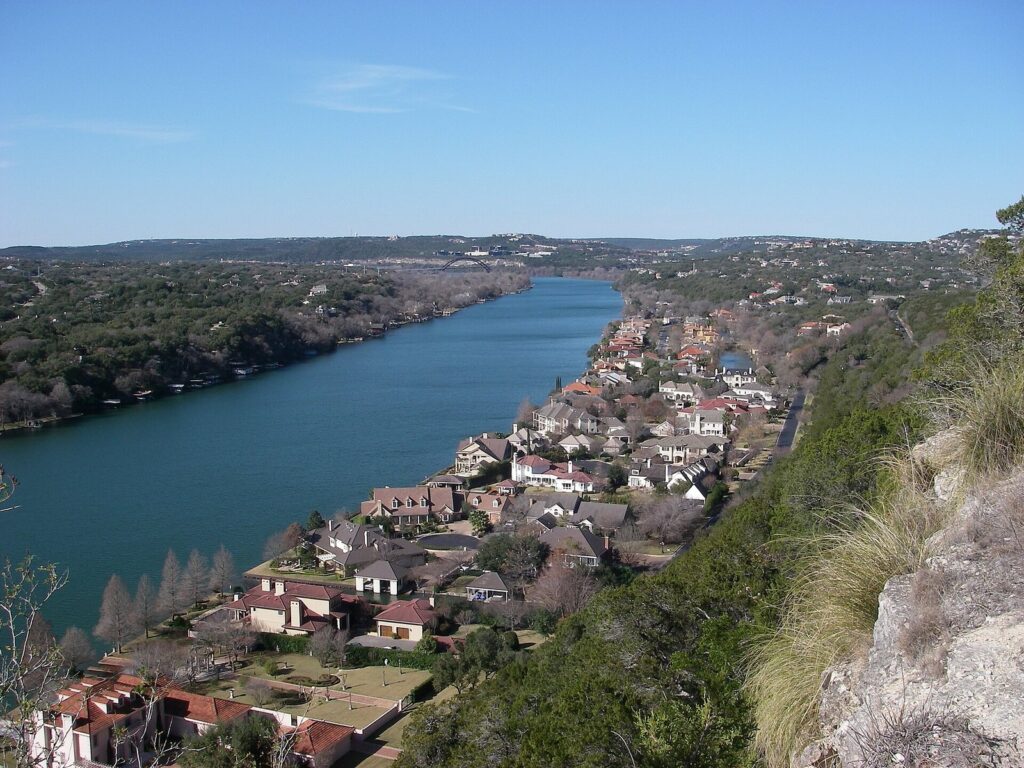
Mount Bonnell, the high point of Covert Park in West Austin, looks up Lake Austin toward the Pennybacker Bridge. Stone stairs lead to the top, so it isn’t a step-free visit, and the light is best at sunrise or in the hour before sunset. It’s open 5 a.m. to 10 p.m., and the City posts no entry fee. From October 12 to November 30 the lake below will be drawn down.
Across from Mount Bonnell Road, Mayfield Park (3505 W. 35th St.) keeps a flock of free-roaming peafowl; give them space, as the City asks. Its walled cottage gardens are open when they aren’t booked for events, which usually means Monday through Thursday. It’s open 5 a.m. to 10 p.m., and dogs aren’t allowed.
Verdict: 30 well-spent minutes at either end of the day, but exposed and hot at 2 p.m. in August. It’s also the safe way to see the Pennybacker Bridge, whose roadside overlook is on the skip list below.
9. Lady Bird Johnson Wildflower Center
The Wildflower Center, the University of Texas’s 284-acre botanic garden in southwest Austin (4801 La Crosse Ave.), shows what Central Texas looks like in bloom. Bluebonnets usually flower from late March into mid- to late April and peak in early April, depending on fall and winter rain. From September through May the gardens are open 9 a.m. to 5 p.m., with last entry at 4; from June through August the hours shift to 7 a.m. to 3 p.m. Adults pay $15 Monday through Thursday and $18 Friday through Sunday, seniors 65 and older and military pay $12 or $15, and ages 3 to 17 pay $9 or $12. It’s card only, buying ahead is strongly encouraged, and parking is limited.
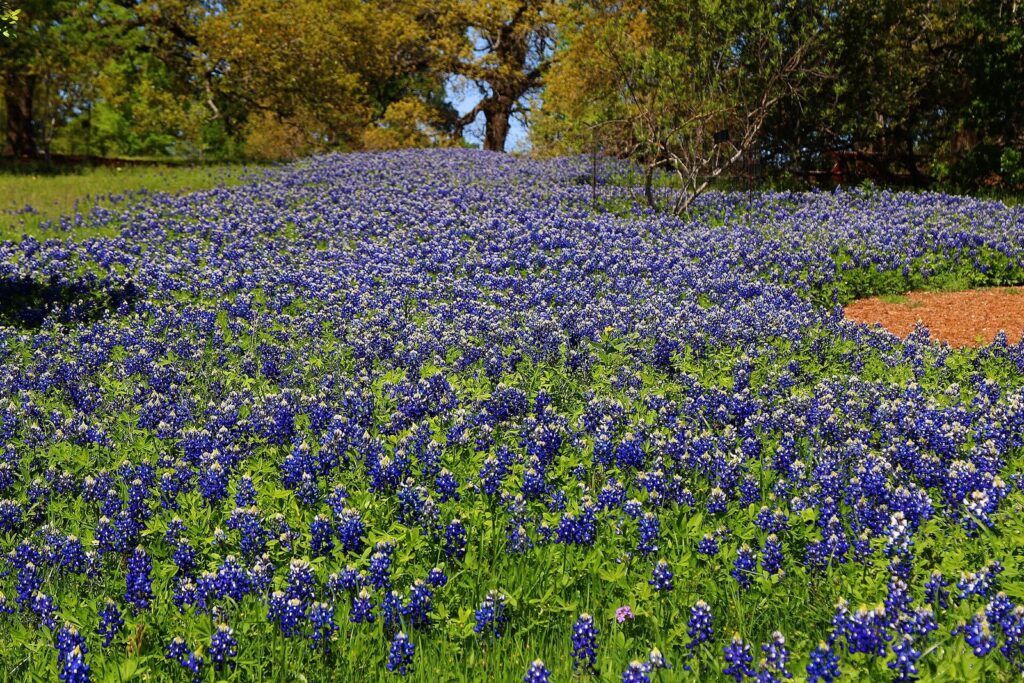
The café is closed for remodeling, so bring a refillable water bottle. A free audio tour runs on the TravelStorys app, and through November 10 the Center stays open into the evening on Tuesdays for its Tuesday Twilights series. Verdict: a highlight in early April, pleasant in fall and hard going in July. Weekday tickets are $3 cheaper.
10. McKinney Falls State Park
McKinney Falls, 13 miles from the Capitol, is the closest thing to a Hill Country swimming hole inside Austin. Onion Creek runs over the park’s Upper and Lower Falls, and swimming is allowed, though the creek can flood after rain, so check conditions first. Entry is $6 for anyone 13 or older and free for younger children. Day passes sell out every weekend and holiday, so reserve online or call (512) 389-8900. A burn ban has been in place since August 11, 2026. Verdict: a good weekday half day, best after decent rain; in a dry spell the falls can shrink to a trickle.
11. Barton Creek Greenbelt
The Greenbelt follows Barton Creek upstream from Zilker Park through more than 12 miles of trails, including a 7.5-mile main trail. Popular entrances include the Zilker trailhead (2212 William Barton Dr.), Spyglass, the 360 trailhead off Loop 360 (free lot, composting restrooms) and Gaines Park for Twin Falls. Water levels depend entirely on recent rain, and the City doesn’t monitor them, pointing hikers to USGS and LCRA creek gauges instead. The creek can rise fast and the trail has little lighting, so finish before dark. Verdict: good hiking in any season, but count on a swim only after a wet spell.
Which attractions can you only find in Austin?
Every state has a capitol. These could only happen here:
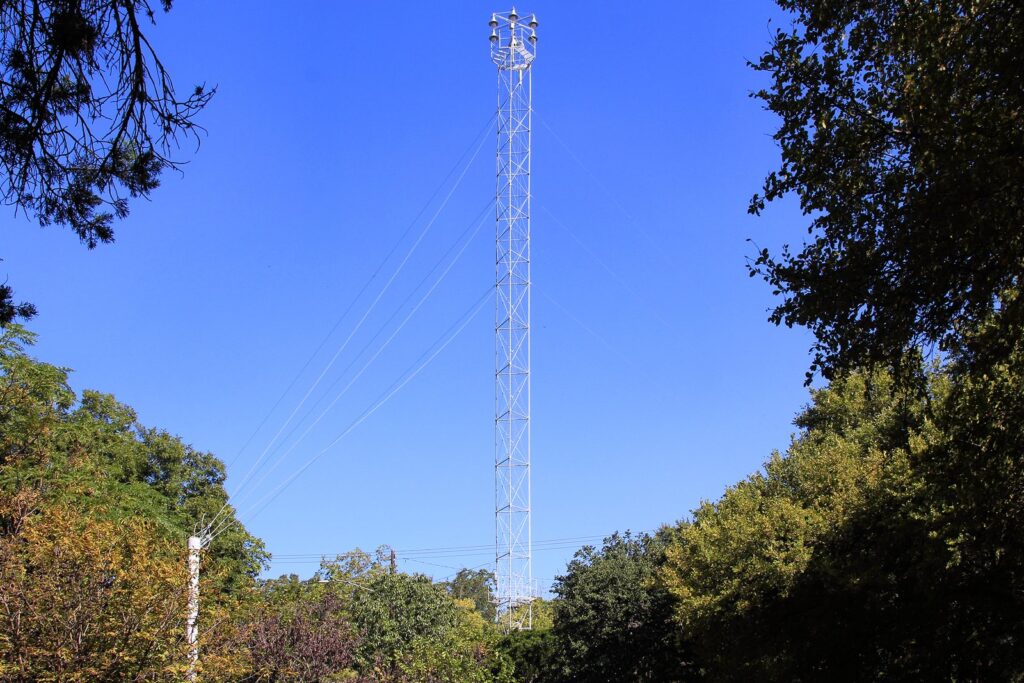
- The moonlight towers. In 1894 and 1895 Austin put up 31 towers, each 165 feet tall, to light the city from above. Austin Energy says 17 still stand and calls them the only working moonlight towers in the world. Every December the one in Zilker Park becomes the frame of the Zilker Holiday Tree, which will be lit on November 29 this year.
- Cathedral of Junk. Since 1988 Vince Hannemann has stacked more than 60 tons of salvage into a walk-through sculpture in his South Austin backyard (4422 Lareina Dr.). It’s his home and has no set hours, so call (512) 299-7413 before you go. Entry is free, and cash donations are welcome.
- HOPE Outdoor Gallery. The graffiti park at Castle Hill closed in 2019, but HOPE reopened on November 28, 2025, on 17 acres at 741 Dalton Lane near the airport. It’s free, with public paint walls, and closed Monday and Tuesday. Its website lists its hours two different ways, so check before you go.
- Esther’s Follies. A comedy and magic revue at 525 E. Sixth St., on Thursday at 7 p.m. and Friday and Saturday at 7 and 9 p.m. Reserved seats start at $30 plus a $5.75 fee.
- Museum of the Weird. A small museum of oddities inside Lucky Lizard Curios & Gifts at 412 E. Sixth St., open daily from 10 a.m. Admission is $12.99 for adults and $8.99 for kids under 8, and the stairs mean it isn’t fully wheelchair accessible.
- Treaty Oak. A live oak on Baylor Street believed to be more than 500 years old. The treaty story attached to it is legend. Its survival after a 1989 herbicide poisoning, which left about a quarter of the tree, is not.
How do Austin’s attractions group by area?
Most headline sights sit in a compact core a few miles across, from the UT museums south to Zilker and South Congress. Grouping your days by area saves hours of backtracking.
| Area | What’s there | Getting there | Pair it with |
|---|---|---|---|
| Downtown and the Capitol | Texas State Capitol, Congress Avenue Bridge bats, Sixth Street, the Elephant Room, the Driskill Hotel (1886), the Mexic-Arte Museum, the Central Library | Walkable | The Capitol by day, bats at sunset, music after dark |
| Capitol Complex and UT | Bullock Museum, Blanton Museum and Austin, LBJ Library, Harry Ransom Center, Texas Science & Natural History Museum | A 10- to 30-minute walk north of the Capitol, or a short bus ride | A hot afternoon, ideally a Tuesday |
| South Congress | SoCo shops, the Continental Club, the “i love you so much” mural, Allens Boots, the “Greetings from Austin” mural nearby | About two miles south of the Capitol; buses run along Congress | Late afternoon into the early show |
| Zilker and Barton Springs | Barton Springs Pool, Zilker Botanical Garden, the Zilker Eagle, the Greenbelt trailhead, paddle rentals, UMLAUF Sculpture Garden | CapMetro Route 30, a bike, or the lakeside trail from downtown | A morning swim, then a paddle |
| East Austin | Texas State Cemetery (Stephen F. Austin’s grave; open daily 8 a.m.–5 p.m.), Franklin Barbecue, East Sixth Street, the free George Washington Carver Museum, the French Legation | About a mile east of the Capitol; walk, bike or bus | A barbecue lunch and the cemetery |
| West Austin hills | Mount Bonnell, Mayfield Park, Laguna Gloria | Car or rideshare | Sunset |
| City edges | Wildflower Center (southwest), McKinney Falls (southeast), Cathedral of Junk (south), HOPE Outdoor Gallery (near the airport) | Car needed | A half day each |
| Beyond Austin | Hamilton Pool Preserve and the Hill Country towns | Car needed, plus a reservation for Hamilton Pool | A full day, not an afternoon |
How should you plan around the heat?
Summer in Austin is long and serious. NOAA’s 1991–2020 normals put the average high at 96.6°F in July and 97.8°F in August, and the city averages about 29 days a year at 100°F or more, mostly in those two months. Plan by time of day rather than by neighborhood:
| Time | Where to be | Why it works |
|---|---|---|
| 6–9 a.m. | The Butler Trail, Mount Bonnell, or a kayak (Texas Rowing Center opens at 6) | The only cool hours of a summer day |
| 9 a.m.–noon | Barton Springs, or the Wildflower Center on its summer hours (7 a.m.–3 p.m.) | Water before the heat peaks; gardens before they bake |
| Noon–5 p.m. | The Capitol, the Bullock, the Blanton, the LBJ Library, the Ransom Center | All air-conditioned and within about a mile of each other |
| 5–8 p.m. | South Congress, a second swim, then the bats at sunset | Longer shadows and the evening emergence |
| After 8 p.m. | Live music | Still warm, but the sun is down |
The gardens shorten their hours in summer (Zilker Botanical Garden runs 8 a.m. to 4 p.m. from June through August), so plan them early, and carry more water than you think you need. Storms bring their own risk: heavy rain can close Barton Springs and make Greenbelt creek crossings dangerous within hours.
Which Austin attractions need tickets or reservations?
Most of Austin is walk-up. These are the exceptions as of September 23, 2026:
| Attraction | What to book | Details |
|---|---|---|
| Hamilton Pool Preserve | Required, every day | Book online for a 9 a.m.–12:30 p.m. or 2–5:30 p.m. slot: $12 per vehicle, then $8 per adult in cash at the gate. Dates are open through November 2026. |
| McKinney Falls State Park | Day pass | Sells out every weekend and holiday; reserve online or call (512) 389-8900. |
| Wildflower Center | Dated ticket | Buying ahead is strongly encouraged; cards only. |
| Bat cruises | A seat on the boat | Book online ($3 fee); popular nights sell out. |
| Governor’s Mansion | Free tour | At least a week ahead, with a background check; no tours in October 2026. |
| Franklin Barbecue | Optional pre-order | Serves from 11 a.m. Tuesday–Sunday until the meat runs out, usually by 2 or 3 p.m.; to-go pre-orders of 5 to 30 pounds can be booked 2 to 56 days ahead. |
| Austin City Limits TV tapings | Free pass by drawing | Enter the online giveaway announced about a week before each taping; a pass still doesn’t guarantee a seat. |
What can you skip or do differently?
- The UT Tower, for now. It’s under scaffolding, and tours are suspended until the restoration ends, expected in summer 2027.
- The Pennybacker Bridge overlook. There’s no official parking, and TxDOT’s Loop 360 project, which started in April 2026 and runs to late 2029, will remove the shoulders people park on. See the bridge from Mount Bonnell instead.
- Sixth Street by daylight. It’s a nighttime strip of bars. Apart from Esther’s Follies and the Museum of the Weird, there’s little reason to come before dark.
- Hamilton Pool as a swim. Swimming is limited to a small area, depends on bacteria levels and rain, and the trail under the overhang is closed for falling rock. Go for the scenery.
- Greenbelt swimming holes in a dry spell. No rain, no water.
- Barton Springs on a summer weekend afternoon. Same cold water, more people and, in season, paid parking. Go on a weekday morning.
- The Hill Country in an afternoon. With two days or less, stay in town. Hamilton Pool and the small towns west of Austin deserve a full day.
Which attractions suit your kind of trip?
| If you’re | Put these first | Leave these out |
|---|---|---|
| On a first visit with two days | The Capitol, the bats, Barton Springs, South Congress, one museum, one music venue | Day trips |
| Traveling with kids | The Bullock and an IMAX film, the Zilker Eagle, Barton Springs, a bat cruise ($9–$10 child fares), the Texas Science & Natural History Museum | The Elephant Room and other 21-and-over rooms |
| Visiting in July or August | Water early, museums at midday, bats and music at night | Midday hikes and Mount Bonnell at noon |
| Traveling without a car | Downtown, the UT museums, South Congress, Barton Springs by bus or bikeshare | The Wildflower Center, McKinney Falls, Hamilton Pool |
| On a tight budget | The Capitol, the bats from the bridge, the Butler Trail, the Ransom Center, Tuesday at the Blanton and LBJ Library, the first Sunday at the Bullock | Boat cruises and IMAX |
| Into the outdoors | The Greenbelt, McKinney Falls, the Wildflower Center, a kayak on Lady Bird Lake | Sixth Street |
| Into history | The Capitol and its visitors center, the Bullock, the LBJ Library, the Texas State Cemetery | Sixth Street by daylight |
How do you get between Austin attractions?
Downtown, the UT museums and South Congress are walkable in cooler months, and Zilker is a pleasant walk along the lake trail. For everything else:
- Buses: CapMetro local fares are $1.25. Tap a contactless card or phone on the bus reader and you’ll pay no more than $2.50 in a day, and riders under 18 are free. Paper day passes have been retired, and cash buys only an exact-change single ride. Route 30 stops at Barton Springs. CapMetro’s board votes on September 28 on a proposal to raise fares from January 2027.
- From the airport: Route 20 leaves the lower level just outside baggage claim every 15 to 30 minutes and reaches downtown in about 35 minutes, for $1.25.
- Bikeshare: CapMetro Bikeshare costs $2.50 plus 25 cents a minute, or $10 for a day of unlimited 30-minute rides.
- Luggage: the Visit Austin visitor center (103 E. Fifth St.; Monday–Saturday 9 a.m.–5 p.m., Sunday 10 a.m.–5 p.m.) stores bags for $8 each per day, space permitting, which helps on checkout day.
Austin attractions FAQ
What is Austin best known for?
Live music, the Texas State Capitol, the bats under the Congress Avenue Bridge, Barton Springs Pool, barbecue and the University of Texas. For a visitor, that adds up to a day built around the clock: swim or paddle early, museums in the heat, bats at sunset and a show after dark.
Is the Texas State Capitol free to visit?
Yes. The building, the guided tours and the Capitol Visitors Center are all free, and the visitor garage at 1201 San Jacinto Blvd. is free for the first two hours on weekdays.
What time do the Congress Avenue bats come out?
Around sunset: up to 30 minutes before it on hot, dry evenings and up to 40 minutes after it on cool, damp ones. Arrive half an hour before sunset and check the Austin Bat Refuge’s nightly prediction. The colony is in residence roughly March through October, and the biggest flights come in August.
Can you swim in Lady Bird Lake?
No. Swimming, wading and bathing in Lady Bird Lake are illegal under City code. Swim at Barton Springs or Deep Eddy Pool instead, and paddle the lake.
Is Barton Springs Pool open all year?
Yes, apart from its Thursday cleaning (9 a.m. to 7 p.m.) and occasional closures for floods or repairs. Entry fees apply from March through October, and the water stays at 68 to 70°F in every season.
Which Austin attractions are closed on Mondays?
The Blanton Museum, the Harry Ransom Center galleries, the Texas Science & Natural History Museum, the Broken Spoke and Franklin Barbecue. The Capitol, the Bullock, the LBJ Library, Barton Springs and the Wildflower Center are open.
Do you need a car to see Austin’s attractions?
Not for the core. Downtown, the UT museums, South Congress and Zilker all work on foot, by bus or by bikeshare. You’ll want a car or rideshare for Mount Bonnell, the Wildflower Center, McKinney Falls, the Cathedral of Junk, HOPE Outdoor Gallery and Hamilton Pool.
Related Austin Guides
- Where to Stay in Austin: Areas and Hotels: which neighborhood puts you closest to the sights on this list, with or without a car.
- Best Restaurants in Austin: Complete Food Guide: where to eat between sights, from Michelin-starred barbecue to breakfast tacos.
Sources and verification
Every price, hour and closure in this guide was checked on September 23, 2026, against the organization that runs the place or the agency responsible for it. Where an official page was silent or contradicted itself, we left the detail out or said so. The guide is compiled from these sources rather than from other travel lists, and it doesn’t claim first-hand visits, so confirm anything critical with the links below before you go.
- Texas State Preservation Board: Capitol hours, tours, parking, Capitol history and Governor’s Mansion tours
- City of Austin Parks and Recreation: Barton Springs Pool, park closures, Lady Bird Lake rules, Barton Creek Greenbelt, Mount Bonnell, Mayfield Park and Deep Eddy Pool
- Bullock Texas State History Museum, Blanton Museum of Art, LBJ Presidential Library, Harry Ransom Center, Texas Science & Natural History Museum and the UT Tower restoration
- Lady Bird Johnson Wildflower Center and its bluebonnet FAQ; Texas Parks and Wildlife, McKinney Falls State Park; Travis County Parks, Hamilton Pool Preserve; the Texas State Cemetery
- Bat Conservation International, the Austin Bat Refuge, Lone Star Riverboat and Capital Cruises
- CapMetro: fares, airport service and bikeshare; NOAA National Centers for Environmental Information, 1991–2020 climate normals for Austin Camp Mabry; National Weather Service, Austin climate summary
- ACL Music Festival, Formula 1 United States Grand Prix, the Continental Club, the Broken Spoke, the Elephant Room, Austin City Limits tapings, Esther’s Follies, the Museum of the Weird, HOPE Outdoor Gallery and Franklin Barbecue
- UMLAUF Sculpture Garden + Museum, Zilker Botanical Garden, the Zilker Eagle, Texas Rowing Center, the Rowing Dock and TxDOT’s Loop 360 project
- Austin Energy and the Handbook of Texas on the moonlight towers, the Zilker Holiday Tree, the Handbook’s Treaty Oak entry, the Paramount Theatre restoration and the Visit Austin Visitor Center
Photo credits
- Texas State Capitol: photo by LoneStarMike, Wikimedia Commons (CC BY 3.0)
- Bats at the Congress Avenue Bridge: photo by Dan Pancamo, Wikimedia Commons (CC BY-SA 2.0)
- Barton Springs Pool: photo by Ligocsicnarf89, Wikimedia Commons (CC BY 4.0)
- Congress Avenue from South Austin: photo by Utexas06 at English Wikipedia, Wikimedia Commons (public domain)
- Sixth Street at dusk: photo by Larry D. Moore, Wikimedia Commons (CC BY 4.0)
- Bullock Texas State History Museum: photo by Larry D. Moore, Wikimedia Commons (CC BY 4.0)
- View from Mount Bonnell: photo by Leaflet, Wikimedia Commons (public domain)
- Bluebonnets at the Wildflower Center: photo by Larry D. Moore, Wikimedia Commons (CC BY 4.0)
- Moonlight tower on East Side Drive: photo by Larry D. Moore, Wikimedia Commons (CC BY 4.0)
- Kayakers on Lady Bird Lake (featured image): photo by Michael Barera, Wikimedia Commons (CC BY-SA 4.0)